



Diptera.info :: Identification queries :: Diptera (adults)
Who is here? 1 guest(s)
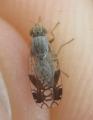
 Calliphoridae - 2 => Pollenia cf pediculata female
|
|
| Woodmen |
Posted on 21-04-2018 12:39
|
|
Member Location: Kirov region, Russia Posts: 2013 Joined: 17.01.13 |
Russia, Kirov region. 17.04.2018. Vladimir.    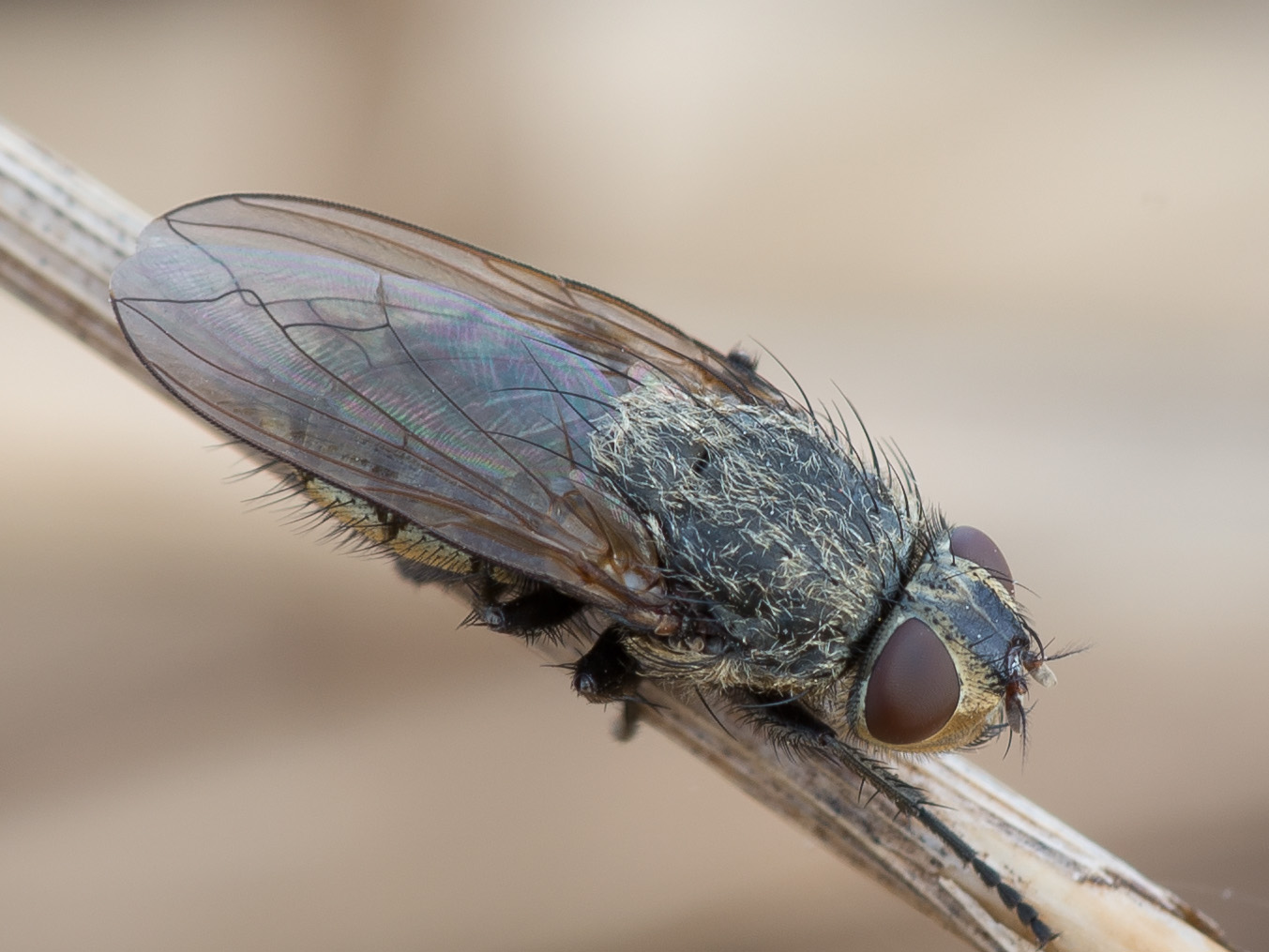  
Edited by Woodmen on 22-04-2018 09:14 |
 |
|
| johnes81 |
Posted on 21-04-2018 19:43
|
 Member Location: Berlin, Germany Posts: 1980 Joined: 15.10.16 |
Pollenia cf pediculata female I hope that you understand what I am telling you. The prototype for Pollenia pediculata has a small petiole. Even Dr. Rognes has not seen this outside of the prototype, so this is a significant find for anyone that loves Pollenia and Calliphoridae. To me, it is like finding a lump of gold. I thought that I had one too but it turned out to be a different species. I only know of three other Pollenia that are known to have a small petiole and one of them is limited to Africa. The other two are easy to distinguish from this species in the photo. Thus, pediculata is most likely what you have found. I hope that you will collect this if you find it again. A quick examination can prove it to be pediculata. Simply look under the wing to the node at the junction of the humeral crossvein and vein sc: https://diptera.i...o_id=10761 Pollenia pediculata has a group of pale hairs at this node (typically 6-9 hairs). If you collect it and you do not wish to examine it, then contact me please. I will be happy to examine it for you. If you do not want it in the Moscow museum, then I will place it in the Berlin museum. Either way, it is an excellent find. I have examined the photos as much as possible and it certainly resembles pediculata but further examination is required for a certain id. Hopefully, you can find it again and collect it for examination. Very nice photos and an excellent find. I hope that you have a pleasant day. Edited by johnes81 on 21-04-2018 19:48 John and Nini. Naturalists not experts. |
|
|
|
| Woodmen |
Posted on 22-04-2018 09:13
|
|
Member Location: Kirov region, Russia Posts: 2013 Joined: 17.01.13 |
You intrigued me. I'm certainly not an expert, but I will now take a closer look, and in case you will take this fly. Just today we have returned to winter and dropped 20 cm of snow... Where and how to look under the wing, I understand. And that's what the small petiole and where it is for me remained a riddle... Could you somehow illustrate this place, which is a prototype of Pollenia pediculata. Regards Vladimir. |
|
|
|
| johnes81 |
Posted on 22-04-2018 10:44
|
|
Member Location: Berlin, Germany Posts: 1980 Joined: 15.10.16 |
The petiole is the small stem vein circled in the attached photo. I've not seen this on pediculata either. Dr. Rognes informed me that the prototype of pediculata has this petiole. He mentions this fact in his book as well. I cannot match the fly in the photos with two other Pollenia known to have a petiole, so i am left with pediculata or a variation of the other two possibilities. more snow? i hope that you stay warm. johnes81 attached the following image: 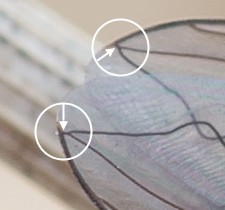 [10.73Kb] John and Nini. Naturalists not experts. |
|
|
|
| Woodmen |
Posted on 22-04-2018 13:54
|
|
Member Location: Kirov region, Russia Posts: 2013 Joined: 17.01.13 |
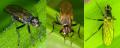
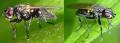
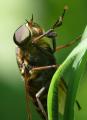
Thank you, now everything is clear! As for the weather, we have not cold, just a lot of snow. Here you can see my today's pictures. Edited by Woodmen on 22-04-2018 13:55 |
|
|
|
| John Carr |
Posted on 22-04-2018 14:10
|
 Super Administrator Location: Colorado, USA Posts: 10544 Joined: 22.10.10 |
I have seen a couple photos of Pollenia from North America with closed cell r5, less than 1% of the photos on BugGuide. Most or all of our species are introduced from Europe. I don't think we have the species that regularly has closed r5. |
|
|
|
| johnes81 |
Posted on 22-04-2018 14:44
|
|
Member Location: Berlin, Germany Posts: 1980 Joined: 15.10.16 |
you should collect those with a petiole/stalk. it will be very interesting to discover other species with a petiole. Pollenia haeretica is reputed to have a stalk but this is debated and it is restricted to Africa. The similar Pollenia ibalis is reputed to be always open. The conistent petiole is common for the amentaria group, for example,Pollenia leclercqiana. I think that North America has only amentaria from this group? you should definitely collect those with a petiole. You may just find a pediculata which is very fascinating. I'm still searching for a pediculata with a petiole. I would be most happy to see a photo of any Pollenia with a closed r4+5 that is consistently open. I'll look around Bug Guide a bit today... John and Nini. Naturalists not experts. |
|
|
|
| johnes81 |
Posted on 22-04-2018 14:55
|
|
Member Location: Berlin, Germany Posts: 1980 Joined: 15.10.16 |
Thank you for posting the linkl to your photos, Vladimir. Russia is beautiful. I'd like to visit someday with my cameras. I studied Russian language a bit many years ago but I forget alot of what I had learned. I love to listen to Yulia Savicheva. Her music is Superb. She is my favorite female artist in the world. Great voice. Someday I will study Russian language again  https://www.youtu...OiNwm5X-WE Edited by johnes81 on 22-04-2018 14:55 John and Nini. Naturalists not experts. |
|
|
|
| John Carr |
Posted on 22-04-2018 15:03
|
|
Super Administrator Location: Colorado, USA Posts: 10544 Joined: 22.10.10 |
https://bugguide....iew/902340 -- dark Pollenia from Tennessee https://bugguide....ew/1339650 -- from Indiana We have vagabunda, labialis, pediculata, griseotomentosa, angustigena, and rudis. |
|
|
|
| johnes81 |
Posted on 22-04-2018 15:15
|
|
Member Location: Berlin, Germany Posts: 1980 Joined: 15.10.16 |
both of those resemble Pollenia pediculata as well. Pollenia pediculata is smaller than the rest of the rudis group. I measure females consitently between 7 and 7.2mm and males between 6 and 7mm. I have no problem with labelling them Pollenia cf pediculata. None of the others are known to have a closed cell, id est, vagabunda, labialis, griseotomentosa, angustigena, and rudis are always open that we know of anyway. However, all of the remaining species are much larger than pediculata with the exception of griseotomentosa. rudis and angustigena are consistently 9-10 mm, sometimes 8mm. Pollenia amentaria and leclercqiana are not possible for the species in the photos that you link. These species most resemble pediculata. if you collect one with a petiole, then please let me know. John and Nini. Naturalists not experts. |
|
|
|
| johnes81 |
Posted on 22-04-2018 15:28
|
|
Member Location: Berlin, Germany Posts: 1980 Joined: 15.10.16 |
John, I made an error above: I meant to type that Pollenia atramentaria and leclercqiana are not possible for the species in the photos that you link. further, I have no problem with labelling the following photo as Pollenia cf pediculata https://bugguide....iew/902340 the second photo does not show enough details to exclude rudis. I can only suggest rudis group for this photo. https://bugguide....ew/1339650 Edited by johnes81 on 22-04-2018 15:28 John and Nini. Naturalists not experts. |
|
|
|
| Jump to Forum: |