

Diptera.info :: Identification queries :: Diptera (adults)
 Paramormia furcata or ustulata?
|
|
| victorengel |
Posted on 08-02-2021 23:55
|
|
Member Location: Posts: 95 Joined: 20.12.20 |
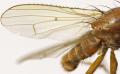
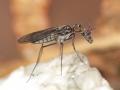
I've noticed the arrangement of spots on the wings of bugguide entries listed under Paramormia furcata differ from that in the text "New Records and Descriptions of Mexican Moth Flies (Diptera: Psychodidae, Psychodinae)" by Sergio Ibáñez-Bernal. Source: Transactions of the American Entomological Society, 134(1):87-131. Published By: The American Entomological Society I've marked up a screen shot from a figure in that paper showing differences I see between that illustration and an observation I made that I matched to the various photos on BG. I compare to my own observation because I can see the spots more clearly than on the BG photos. I'll link the marked up version in a reply. Green spots are spots that occur on mine but are missing in the illustration. Red indicates spots in the illustration missing on mine. Edited by victorengel on 09-02-2021 00:19 |
|
|
|
| victorengel |
Posted on 09-02-2021 00:10
|
|
Member Location: Posts: 95 Joined: 20.12.20 |
I give up on uploading. Here's my image on iNat. I added the image I was trying to upload to that observation.  |
|
|
|
| victorengel |
Posted on 09-02-2021 00:13
|
|
Member Location: Posts: 95 Joined: 20.12.20 |
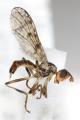
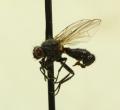
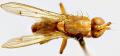
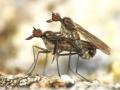
While we're at it, someone else posted a similar fly that I suggested was the same, but the antennae are different. On all my observations, two segments on the antennae are lighter than the others, as shown in my first image posted. This one has all segments about the same. |
|
|
|
| victorengel |
Posted on 09-02-2021 01:18
|
|
Member Location: Posts: 95 Joined: 20.12.20 |
P. ustulata, from Ježek. https://www.aemnp..._0_129.pdf Marked up to show differences to my first picture.
Edited by victorengel on 09-02-2021 01:20 |
|
|
|
| weia |
Posted on 10-02-2021 11:44
|
|
Member Location: Posts: 455 Joined: 10.07.11 |
Where dit you see that #2? Very interesting. About antennae: males have longer ones that females. But I don't think that's enough to make #2 and #4 the same species! |
|
|
|
| victorengel |
Posted on 10-02-2021 18:37
|
|
Member Location: Posts: 95 Joined: 20.12.20 |
weia wrote: Where dit you see that #2? Very interesting. About antennae: males have longer ones that females. But I don't think that's enough to make #2 and #4 the same species! I see them regularly at my house in Austin, TX. Here are some observations on iNat. https://www.inatu...fiable=any The color pattern on the antennae really interests me. It always seems to be the same pattern (different from #3). Next time I see one, I'll capture it for photos of the face, etc. Edited by victorengel on 10-02-2021 18:38 |
|
|
|
| victorengel |
Posted on 10-02-2021 20:18
|
|
Member Location: Posts: 95 Joined: 20.12.20 |
Is Vaillant F., 1973: Some new Psychodidae Psychodinae from the United States (Diptera). Ann. Soc. Entomol. Fr., 9 (2): 345-379. available online anywhere? I'd go to the UT library to look it up, but it's closed to all but faculty and staff, which I am not. |
|
|
|
| victorengel |
Posted on 10-02-2021 22:05
|
|
Member Location: Posts: 95 Joined: 20.12.20 |
Hah! I found it online. https://gallica.b...ychodidae# |
|
|
|
| victorengel |
Posted on 10-02-2021 22:25
|
|
Member Location: Posts: 95 Joined: 20.12.20 |
Looks to me like corniculata. |
|
|
|
| victorengel |
Posted on 10-02-2021 23:17
|
|
Member Location: Posts: 95 Joined: 20.12.20 |
Vaillant says, "I have examined many spécimens of several species of Panimerus, Jungiella and Peripsychoda and am quite certain that the présence, or absence, of corniculi is a perfectly constant character for a species. It is likely that Duckhousiella furcata comprises at least two species, one with corniculi, the other without." Duckhousiella (Paramormia) corniculata is the one with corniculi, but only in the male. I note that corniculus and corniculi are not in the glossary here. I presume Vaillant is referring to the hornlike projections on the dorsal side of the head. "Corniculi longer than the scape and the pedicel put together." victorengel attached the following image: 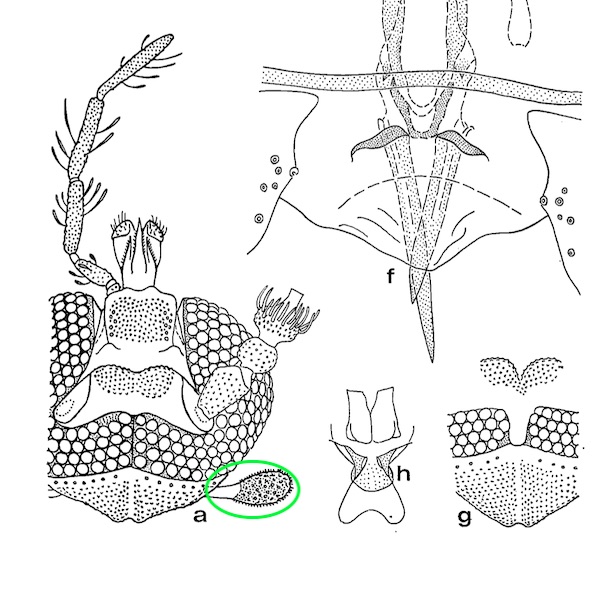 [115.33Kb] Edited by victorengel on 10-02-2021 23:38 |
|
|
|
| weia |
Posted on 12-02-2021 19:49
|
|
Member Location: Posts: 455 Joined: 10.07.11 |
I don't know the situation in the US, it it is not ustulata. |
|
|
|
| victorengel |
Posted on 13-02-2021 01:42
|
|
Member Location: Posts: 95 Joined: 20.12.20 |
I'm pretty sure it's corniculata. |
|
|
|
| Jump to Forum: |