

Diptera.info :: Family forums :: Asilidae Forum
 > Dysmachus trigonus
|
|
| nick upton |
Posted on 14-10-2013 13:25
|
|
Member Location: Wiltshire, UK Posts: 833 Joined: 12.03.10 |
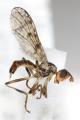
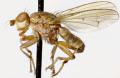
Can anyone help ID this Asilid. Using a key www.robberflies.info/keyger/htmle/keymachimus.html#1 seems to lead to M. rusticus, but it was on heathland, not downland which is typical for rusticus, so I doubt it can be this. I can provide close crops of most key views I think if needed! c 15mm 21.7.13 Studland heath, Dorset, UK. Several seen hunting from sandy paths through heather covered coastal dunes, and mating. nick upton attached the following image: 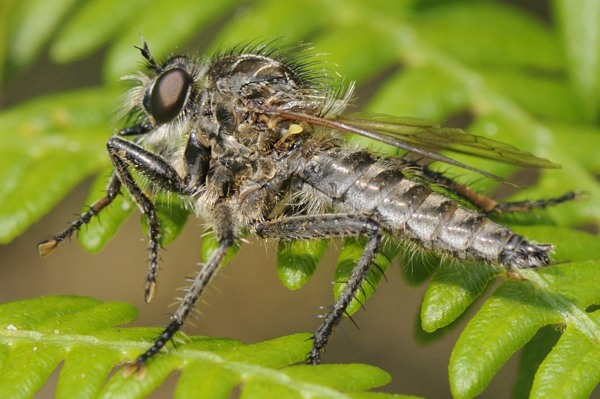 [138.1Kb] Edited by nick upton on 31-10-2013 14:53 Nick Upton - naturalist and photographer |
|
|
|
| nick upton |
Posted on 14-10-2013 13:26
|
|
Member Location: Wiltshire, UK Posts: 833 Joined: 12.03.10 |
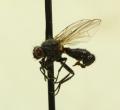
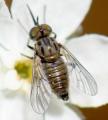
mating pair profile
nick upton attached the following image: 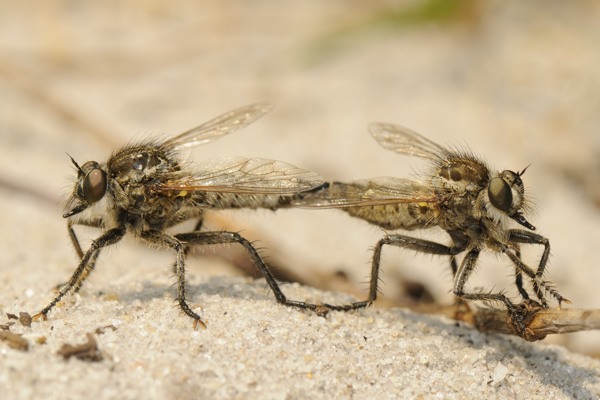 [117.7Kb] Nick Upton - naturalist and photographer |
|
|
|
| nick upton |
Posted on 14-10-2013 13:27
|
|
Member Location: Wiltshire, UK Posts: 833 Joined: 12.03.10 |
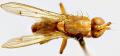
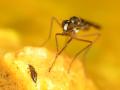
mating pair top view
nick upton attached the following image: 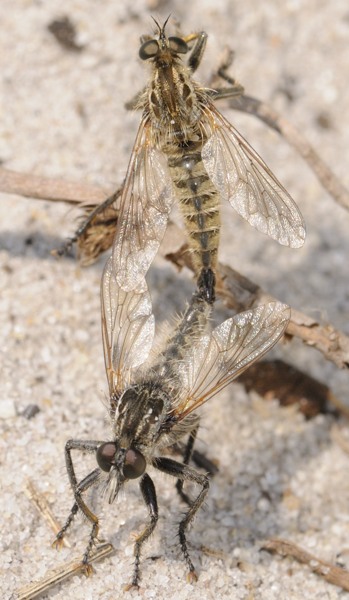 [130.4Kb] Nick Upton - naturalist and photographer |
|
|
|
| nick upton |
Posted on 16-10-2013 21:08
|
|
Member Location: Wiltshire, UK Posts: 833 Joined: 12.03.10 |
I now think this may be Eutolmus rufibarbis - quite similar in appearance to M. rusticus, which prefers heathland and is known from the site I photographed it at.
Nick Upton - naturalist and photographer |
|
|
|
| jaho |
Posted on 16-10-2013 22:16
|
 Member Location: Warsaw Posts: 78 Joined: 11.11.11 |
Not Eutolmus, but Dysmachus species. |
|
|
|
| nick upton |
Posted on 16-10-2013 22:34
|
|
Member Location: Wiltshire, UK Posts: 833 Joined: 12.03.10 |
Many thanks Jaho. The differences between the Asilinae genera are clearly too subtle for me! Dysmachus trigonus is recorded for this location and is another heathland robberfly, so it may be this.
Nick Upton - naturalist and photographer |
|
|
|
| Quaedfliegh |
Posted on 31-10-2013 02:29
|
 Member Location: Tilburg Netherlands Posts: 2225 Joined: 18.05.10 |
Dysmachus trigonus is right!
Greetings, Reinoud Field guide to the robber flies of the Netherlands and Belgium: https://www.jeugdbondsuitgeverij.nl/product/field-guide-to-the-robberflies-of-the-netherlands-and-belgium/ https://www.nev.nl/diptera/ |
 |
|
| jaho |
Posted on 31-10-2013 10:21
|
|
Member Location: Warsaw Posts: 78 Joined: 11.11.11 |
I was also considering trigonus species, but the beard is so much different and I got confused. |
|
|
|
| nick upton |
Posted on 31-10-2013 11:17
|
|
Member Location: Wiltshire, UK Posts: 833 Joined: 12.03.10 |
Many thanks Reinoud for confirming the ID on this heathland robberfly.
Nick Upton - naturalist and photographer |
|
|
|
| Quaedfliegh |
Posted on 31-10-2013 14:26
|
|
Member Location: Tilburg Netherlands Posts: 2225 Joined: 18.05.10 |
The species is very common in the Netherlands. We recently made an interactive guide for the species of the Netherlands, Belgium, Denmark and the British isles. Text is in Dutch. http://waarneming.nl/download/fotogidsAsilidae.pdf Maybe later there will be an English translation. All comments are welcome. (we've got some doubt about M. setibarbis and M. caliginosus for texts and keys are a bit conflicting) Greetings, Reinoud Field guide to the robber flies of the Netherlands and Belgium: https://www.jeugdbondsuitgeverij.nl/product/field-guide-to-the-robberflies-of-the-netherlands-and-belgium/ https://www.nev.nl/diptera/ |
|
|
|
| nick upton |
Posted on 31-10-2013 14:55
|
|
Member Location: Wiltshire, UK Posts: 833 Joined: 12.03.10 |
The guide looks excellent, and an English translation would be very useful! I'd not seen D. trigonus before, but there are no heathland habitats near my home and such places have become rare in the UK. There were lots around at this site on the south coast though, which is full of rare species for the UK. Nick Upton - naturalist and photographer |
|
|
|
| jaho |
Posted on 31-10-2013 18:34
|
|
Member Location: Warsaw Posts: 78 Joined: 11.11.11 |
Now I wish I knew Dutch... Awesome work Reinoud! It's really uplifting to see a new, comprehensive study on European Asilidae. I wish you to keep up the good work on this beautiful creatures and to think of making it more accessible for others. As I wrote before, my doubts were the result of the hair composition in the male's beard. The black hair are only situated on the bottom of the beard whereas usually they are mixed with the white ones in its upper part. Once again - congratulations!  |
|
|
|
| Jump to Forum: |