

Diptera.info :: Identification queries :: Diptera (adults)
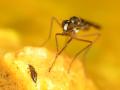
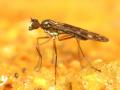
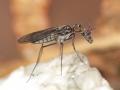
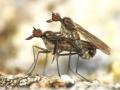
 [Thereva inornata] Thereva ♂
|
|
| JC_Bartolucci |
Posted on 31-05-2025 20:23
|
|
Member Location: Posts: 131 Joined: 06.05.20 |
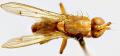
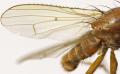
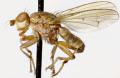
Hello, I’m submitting this male Thereva specimen for your opinions. I’m aware that identifying males in this genus is notoriously tricky, but following the key I used (not the one by Mark van Veen, which unfortunately seems no longer accessible), I was able to observe the listed characters that lead me to Thereva inornata: 2b. Anterior part of tergites 2–5 dark 4b. At least part of the tergites matte 5a. At least one posteroventral seta at the base of the hind femur 6a. Two pairs of dorsocentral setae -> Thereva inornata 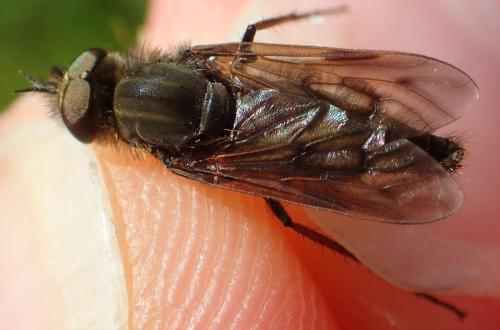 JC Bartolucci : France : Saint-Laurent-d'Aigouze : 30220 : 17/05/2025 Altitude : NR - Taille : 12 mm Réf. : 359537 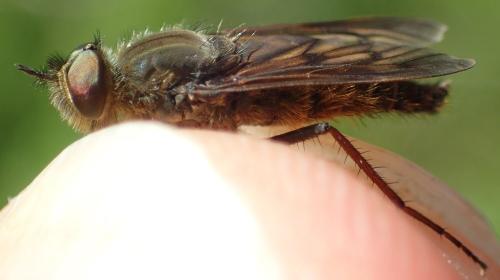 JC Bartolucci : France : Saint-Laurent-d'Aigouze : 30220 : 17/05/2025 Altitude : NR - Taille : 12 mm Réf. : 359540 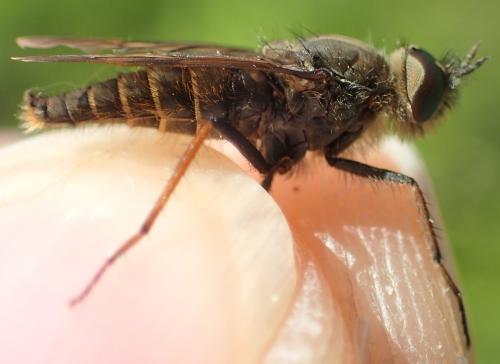 JC Bartolucci : France : Saint-Laurent-d'Aigouze : 30220 : 17/05/2025 Altitude : NR - Taille : 12 mm Réf. : 359541 Despite these matching features, I still have some doubts — particularly due to the dark wing zones, which don’t quite match the gallery images I’ve seen for T. inornata. Any thoughts or confirmation would be greatly appreciated  Thanks in advance! JC Edited by JC_Bartolucci on 06-05-2026 09:54 |
|
|
|
| JC_Bartolucci |
Posted on 02-06-2025 21:53
|
|
Member Location: Posts: 131 Joined: 06.05.20 |
Thereva sp. ? |
|
|
|
| JC_Bartolucci |
Posted on 22-06-2025 07:45
|
|
Member Location: Posts: 131 Joined: 06.05.20 |
I'm bringing this topic back up for one last try |
|
|
|
| JC_Bartolucci |
Posted on 02-05-2026 13:29
|
|
Member Location: Posts: 131 Joined: 06.05.20 |
I try again |
|
|
|
| eklans |
Posted on 03-05-2026 09:17
|
|
Member Location: Franconia, Germany Posts: 4545 Joined: 11.11.18 |
I'm pretty sure that male Thereva inornata is correct.
Greetings, Eric |
|
|
|
| JC_Bartolucci |
Posted on 03-05-2026 12:19
|
|
Member Location: Posts: 131 Joined: 06.05.20 |
Thank you for your confirmation |
|
|
|
| JC_Bartolucci |
Posted on 05-05-2026 08:34
|
|
Member Location: Posts: 131 Joined: 06.05.20 |
It is mentioned here that Thereva inornata is a mountain species. I asked Theo for further details about my specimen, but he told me that he is no longer interested in this family and is therefore no longer able to help. If the montane affinity of this species is indeed confirmed, then the habitat does not fit my observation, which was made in an agricultural lowland area near freshwater and brackish marshes. |
|
|
|
| Carnifex |
Posted on 05-05-2026 09:25
|
 Member Location: Vienna, Austria Posts: 2045 Joined: 23.06.15 |
Not commenting on the ID, but currently the Therevidae key by Mark van Veen is still accessible via wayback machine: https://web.archi...vidae.html . Edited by Carnifex on 05-05-2026 09:25 Cheers, Lorin Font Color All requests are from the urban area of Vienna, if not otherwise stated. My Diptera observations (and other living forms) can be found here, and corrections or comments over there would also be appreciated. |
|
|
|
| JC_Bartolucci |
Posted on 06-05-2026 10:07
|
|
Member Location: Posts: 131 Joined: 06.05.20 |
I am revisiting the Thereva inornata ♂ hypothesis for my specimen, based on three sources: Mark van Veen – Therevidae of Northwest Europe Mortelmans & De Bree (2022) Haarto & Winqvist (2006) For reference, the original discussion on insecte.org is here. Using van Veen’s key, I arrive at T. inornata, mainly because my specimen seems to show: basal posteroventral setae on hind femur 3; tergites 4–5 mostly grey/pruinose; a rather narrow dark anterior band on tergites 4–5; two pairs of dorsocentral setae. However, after reading Mortelmans & De Bree (2022), I understand that males of T. inornata, T. nobilitata and T. handlirschi are very close and should ideally be confirmed using terminalia and chaetotaxy. As I understand the published distinctions: T. inornata hind femur with basal anteroventral row plus 1–4 posteroventral setae; hind femur chaetotaxy usually described as nearly or usually uniserial; tergites 4–5 mostly grey/pruinose with a narrow dark anterior band; two pairs of dorsocentrals. T. nobilitata hind femur with only a basal anteroventral row, without a distinct posteroventral row; anteroventral setae on hind femur more irregular, with displaced/additional setae basally; chaetotaxy considered multiserial; may sometimes also have two pairs of dorsocentrals, so that character alone is not enough. T. handlirschi hind femur with only a basal anteroventral row, regular, without displaced/additional basal setae; chaetotaxy uniserial; scutellum with dense yellow or almost entirely yellow pubescence; also with two pairs of dorsocentrals. So, the main point seems to be the hind femur chaetotaxy: T. inornata: posteroventral setae present, chaetotaxy nearly/uniserial; T. nobilitata: no distinct posteroventral row, chaetotaxy multiserial; T. handlirschi: no posteroventral row, chaetotaxy uniserial, but with a distinctly yellow-haired scutellum. Ecologically, the habitat of my specimen also seems worth mentioning: it was observed in a lowland Mediterranean area, in open agricultural plain near freshwater and brackish marshes. From van Veen and Haarto & Winqvist, T. inornata seems more associated with sandy habitats than with mountain habitats strictly speaking. So at the moment T. inornata still looks like the best fit to me, but I would be very interested in your opinion, especially on the chaetotaxy of hind femur 3 and whether T. nobilitata / T. handlirschi can be excluded here. Many thanks for the replies already provided, and also for the documents and references that have been shared so far. |
|
|
|
| libor |
Posted on 06-05-2026 14:39
|
|
Member Location: western Bohemia Posts: 1302 Joined: 30.05.09 |
Is the specimen in your hands? In that case, simply dissect it, the penis is quite distinctive. Libor |
|
|
|
| Jump to Forum: |