
Gallery Links
Users Online
· Guests Online: 29

· Members Online: 0

· Total Members: 5,072
· Newest Member: Topopa
Forum Threads
Theme Switcher
Switch to:
Last Seen Users
· Jan Maca00:21:35
· bradbarnd05:55:08
· weia06:12:43
· Joerg Schneider07:47:31
· libor07:56:06
· Eugene K08:18:18
· John Carr09:16:39
· Raimo09:46:32
· Juergen Peters10:02:24
· Carnifex10:48:07
Latest Photo Additions
Two unpublished cases of myiasis

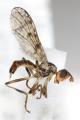
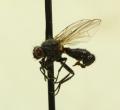
Eye Myiasis- Sarcophaga (Liosarcophaga) dux Thompson, 1869
In 1989 a medical doctor brought two adult Sarcophagidae, one male, one female and several larvae to me. The adult flies were identified as Sarcophaga (Liosarcophaga) dux Thompson, 1869 = exuberans auct. The larvae had been removed from the right eye of an oil rig worker in Libya. They were first instar sarcophagid larvae showing the typical feature of posterior spiracles located at the bottom of a cavity on the posterior segment, a cavity that can be sealed by the edges coming together like lips.
The adult flies, according to the doctor, were common at the rig and frequently caused problems, landing on the faces of sweating workers and visiting their eyes. They had been reported as causing intense irritation. In this single case the eye was seriously damaged the larvae having penetrated the cornea.
Sarcophaga (Liosarcophaga) dux is found in Albania, Bulgaria, Canary Islands, Croatia, Cyprus, France (mainland), Greece (mainland), Italy (mainland), Malta, Romania, Sardinia, Sicily, Spain (mainland), Ukraine and Yugoslavia ( Serbia, Kosovo, Voivodina, Montenegro). However the species is mainly Afrotropical and widespread from the Western Cape, Eastern Cape, Lesotho, KwaZulu-Natal, Gauteng, Northwest Province, to Botswana, Mozambique, Togo and Ethiopia to Egypt. In both regions (Palaearctic and Africa) it replaces the Oriento-Australasian species Sarcophaga misera Walker, 1849.
The only previous case of myiasis in this species is that of a specimen in an Egyptian collection reared from a human ear.

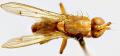
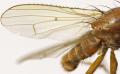
Vaginal Myiasis - Eristalis tenax (Linnaeus, 1758)
A last instar larva of this Syrphidae species (the familiar rat-tailed maggot) was removed from the vagina of a drug-dependant and often comatose prostitute at a Belfast, Ireland hospital in 1971. Eristalis tenax is, seemingly, only reported in cases of intestinal myiasis (eggs or first instar larvae swallowed in contaminated drinking water). Urinogenital myiasis usually involves Calliphoridae, Muscidae and Sarcophagidae, although I have also seen Anisopus fenestralis Anisopidae in a few instances.

An account of myiasis is given on the Wikipedia Site.
Comments
No Comments have been Posted.
Post Comment
Please Login to Post a Comment.
Ratings
Rating is available to Members only.

Please login or register to vote.

No Ratings have been Posted.
Date and time
08 December 2025 07:02
Login
Username

Password


Not a member yet?
Click here to register.

Forgotten your password?
Request a new one here.
Temporary email?
Due to fact this site has functionality making use of your email address, any registration using a temporary email address will be rejected.

Paul
Donate
Please, help to make
Diptera.info
possible and enable
further improvements!
Latest Articles
Syrph the Net
Those who want to have access to the Syrph the Net database need to sign the
License Agreement -
Click to Download


Public files of Syrph the Net can be downloaded HERE

Last updated: 25.08.2011
Shoutbox
You must login to post a message.

06.12.25 21:37
He last posted here in April, identifying some Chloropidae.

04.12.25 20:02
Dr Michael von Tschirnhaus, a leading expert on Chloropidae and Agromyzidae, died on 16 September 2025 at the age of 86. He will be greatly missed by the international community. R.I.P.

03.12.25 12:46
Anyone has the scan of "Harkness, R. D.; Ismay, J. W. 1976: A new species of Trachysiphonella (Dipt., Chloropidae) from Greece, associated with an ant Cataglyphis bicolor (F.) (Hym., Formicidae)

01.12.25 22:29
I will try to fix the messages this month. We have to make some other configuration changes before software goes out of support at end of year.

29.11.25 21:57
I would prefer not to receive any more messages from diptera.info signed by Paul... (Thread reply notification)... Could they be signed by ‘The diptera.info team’?

19.11.25 12:31
It is with deepest sadness in my heart that I announce that on Saturday, November 15, one of the great minds of world dipterology, prof. Rudolf Rozkošny, left us forever. Please remember him with a

15.08.25 10:15
For those specialists not active on Facebook, I just ask to consider to join our group on FB. Please, be aware that it is not necessary at all to be active on FB outside the diptera group. Actually, n

15.08.25 10:13
We received requests to get permission to ask for ID in our Facebook group, https://www.facebo
ok.com/groups/1798
95332035235/ Until now we pointed to diptera.info, but since Paul's passing we not

23.06.25 18:10
If you have some spare money, there is a copy (together with keys to pupae and larvae) for sale by Hermann L. Strack, Loguivy Plougras, France

23.06.25 11:18
Appreciate it, Tony Irwin! I got the hint to use the key next to Langton and Pinder key for females of Chironomidae. So no specific queries, except the keys... I will keep this on my list and hope th

Render time: 0.01 seconds | 251,082,609 unique visits