

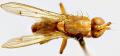
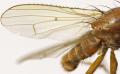
Diptera.info :: Identification queries :: Diptera (adults)
Who is here? 1 guest(s)
 Little fly - but which species?
|
|
| Markus Gebel |
Posted on 02-04-2007 15:59
|
 Member Location: Germany Posts: 210 Joined: 18.07.06 |
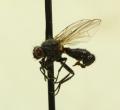
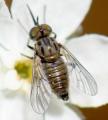
Hello Today I photographed a dung fly(?) on a blossom of a blackthorn "Prunus spinosa" (West-Germany). Unfortunately I do not know, which Species is that. This species was very little...I think 5-6mm. Who can help me and identify this fly? Thanx a lot.-) Greetings Markus Gebel |
 |
|
| Markus Gebel |
Posted on 02-04-2007 16:05
|
|
Member Location: Germany Posts: 210 Joined: 18.07.06 |
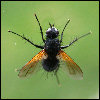
Here the foto... Greetings Markus Markus Gebel attached the following image: 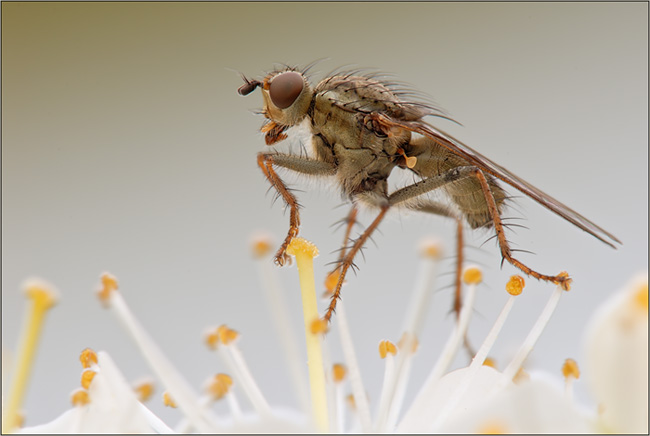 [57.93Kb] |
|
|
|
| crex |
Posted on 02-04-2007 16:36
|
 Member Location: Sweden Posts: 1996 Joined: 22.05.06 |
Scatophaga sp, I think. Nikita V will probably tell you more  |
|
|
|
| Nikita Vikhrev |
Posted on 02-04-2007 18:08
|
 Member Location: Moscow, Russia Posts: 9569 Joined: 24.05.05 |
1. Crex, I'm not at all Scathophagidae expert! 2. But I think it isn't Scathophaga stercoraria. Such spring and small species may be Scathophaga decipens or Scathophaga obscura. Nikita V Nikita Vikhrev - Zool Museum of Moscow University |
|
|
|
| Markus Gebel |
Posted on 02-04-2007 19:23
|
|
Member Location: Germany Posts: 210 Joined: 18.07.06 |
Nikita Vikhrev wrote: 2. But I think it isn't Scathophaga stercoraria. Such spring and small species may be Scathophaga decipens or Scathophaga obscura. Nikita V I'm sure, it isn't Scathophaga stercoraria. This species is very grey... the bigness from Scathophaga stercoraria is 2x or 3x. I don't know Scathophaga decipens and Scathophaga obscura  Thanx Nikita... perhaps another specialist writes some more! @Crex: Thanx (Danke) best regards Markus |
|
|
|
| crex |
Posted on 02-04-2007 22:07
|
|
Member Location: Sweden Posts: 1996 Joined: 22.05.06 |
Nikita Vikhrev wrote: 1. Crex, I'm not at all Scathophagidae expert! ... Perhaps not, sorry 'bout that, but you usually answer questions about Scatophaga and for that we are grateful. I think you are as close to an expert one can come without actually being one Nice photo Markus! |
|
|
|
| Andrey Ozerov |
Posted on 03-04-2007 09:16
|
|
Member Location: Posts: 63 Joined: 05.06.06 |
I think it is Scathophaga stercoraria (L.) |
|
|
|
| Markus Gebel |
Posted on 03-04-2007 14:39
|
|
Member Location: Germany Posts: 210 Joined: 18.07.06 |
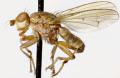
Andrey Ozerov wrote: I think it is Scathophaga stercoraria (L.) I am no expert, but every Scathophaga stercoraria that I saw and photographed, was considerably hairier and looked in their entire appearance considerably larger and stronger. Maybe this fly was as big only half as a normal Scathophaga stercoraria was. With the unaided eye I could not identify it her as a dung fly because she was too small. This postal address and the foto-link shows a Scathophaga stercoraria. http://www.dipter...ad_id=4855 How can one explain so big differences? I have some doubt. Thanks Ozerov best regards Markus Markus Gebel attached the following image:  [50.99Kb] Edited by Markus Gebel on 03-04-2007 14:43 |
|
|
|
| Nikita Vikhrev |
Posted on 03-04-2007 15:37
|
|
Member Location: Moscow, Russia Posts: 9569 Joined: 24.05.05 |
1. To my excuse (I thought it isn't S. stercoraria) I can say that Andrey spend about 15 min before coming to conclusion that it is S. stercoraria. Scathophaga decipens and Scathophaga obscura both has femorae dusting on basal 2/3-4/5, but never completely. 2. S.stercoraria is very variable species, there are boxes in Moscow Zool Museum with hundreds very different specimens of S.stercoraria - yellow and grey, hairy and bold, small and large... So, believ, S.stercoraria is really the best possible answer! Nikita Nikita Vikhrev - Zool Museum of Moscow University |
|
|
|
| pierred |
Posted on 03-04-2007 21:07
|
 Member Location: Paris (France) Posts: 1484 Joined: 21.04.05 |
Nikita Vikhrev wrote: 2. S.stercoraria is very variable species, there are boxes in Moscow Zool Museum with hundreds very different specimens of S.stercoraria - yellow and grey, hairy and bold, small and large... So, believ, S.stercoraria is really the best possible answer! And what would be the criteria of some other species of this genus? I seem to remerber something about yello antennae... Just to know something better... Pierre Duhem |
|
|
|
| Jump to Forum: |