

Diptera.info :: Identification queries :: Diptera (adults)
 Prosena siberita [Tachinidae]
|
|
| Susan R Walter |
Posted on 28-01-2007 23:12
|
 Member Location: Touraine du Sud, central France Posts: 1802 Joined: 14.01.06 |
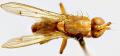
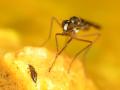
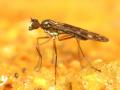
Is this Prosena siberita? It's only 5mm, but it has a long, hinged proboscis that you can just see projecting out horizontally at the front, then folding back under the thorax. I know Tower Hamlets is a deprived inner city area - perhaps it's just had a hard life From 19 August 2006, east London cemetery park. Susan R Walter attached the following image: 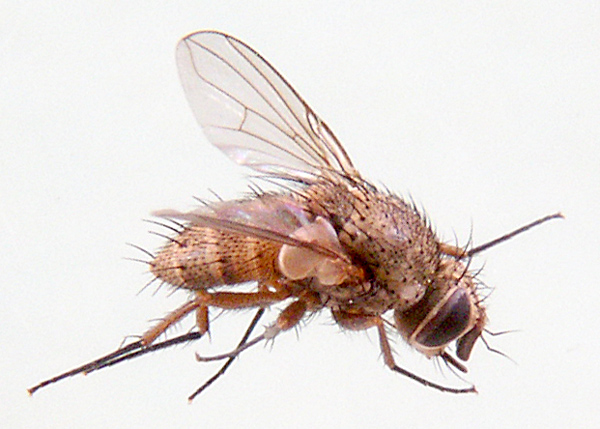 [122.22Kb] Edited by Susan R Walter on 28-01-2007 23:13 Susan |
 |
|
| Susan R Walter |
Posted on 28-01-2007 23:14
|
|
Member Location: Touraine du Sud, central France Posts: 1802 Joined: 14.01.06 |
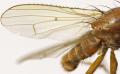
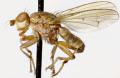
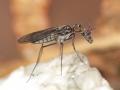
Another view
Susan R Walter attached the following image: 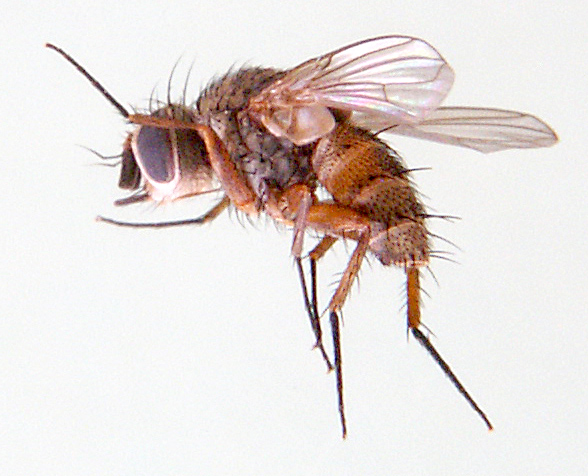 [141.68Kb] Susan |
|
|
|
| ChrisR |
Posted on 29-01-2007 01:21
|
 Super Administrator Location: Reading, England Posts: 7706 Joined: 12.07.04 |
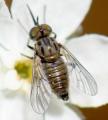
Siphona sp.  Prosena have a rigid proboscis projecting beyond the head (even further than in Stomoxys calcitrans) and they are also a much larger fly. Prosena have a rigid proboscis projecting beyond the head (even further than in Stomoxys calcitrans) and they are also a much larger fly. |
|
|
|
| Susan R Walter |
Posted on 29-01-2007 14:27
|
|
Member Location: Touraine du Sud, central France Posts: 1802 Joined: 14.01.06 |
I did feel it was way too small to be Prosena. I completely forgot about Siphona - thanks Chris - I'll try and key it out tonight.
Susan |
|
|
|
| ChrisR |
Posted on 29-01-2007 18:18
|
|
Super Administrator Location: Reading, England Posts: 7706 Joined: 12.07.04 |
No key to Siphona is particularly easy but I am guessing you'll find it pops out to S. geniculata, after a fair amount of head-scratching. |
|
|
|
| Susan R Walter |
Posted on 29-01-2007 23:18
|
|
Member Location: Touraine du Sud, central France Posts: 1802 Joined: 14.01.06 |
Indeed - I did some lunchtime reading, so I knew what I was in for later. I figured I could discount some because their flight times were spring or early summer, and this specimen is from August. Also a couple had very strong associations with very particular habitats (sand dunes, fens) and this one came from an area of deciduous woodland with sunny glades and was found on an umbellifer. The results of the headscratching session is that I fell at the first hurdle, being unable to distinguish for certain how many post sutural dorsocentral bristles it had - some were missing, but some I think must just not be very strong. I worked the key through with both choices to see what I got, and it only worked if I opted for 4 psdc, which looking at the photos again is probably right. The other important characters that I noted seem to be: a) haustellum shorter than length of head  3rd antennal segment narrower than front femur 3rd antennal segment narrower than front femurc) tegula much the same colour as basicosta - if anything slightly lighter. d) 2 dorsal marginals on tergite 2 e) 8 hairlets below frontal bristles Result: S geniculata - apparently by far the commonest species. I checked out a few of the others to try to make sure I wasn't just giving myself the answer I expected. For instance, it is not S cristata, the next most likely candidate, as S cristata does not have dorsal marginals on tergite 2. The expression 'pops out' is not quite how I would describe the process. Dragged bit by bit from a jar of treacle is more like it. Susan |
|
|
|
| ChrisR |
Posted on 30-01-2007 01:26
|
|
Super Administrator Location: Reading, England Posts: 7706 Joined: 12.07.04 |
Missing bristles shouldn't be a big problem - the socket will remain. Bristles are distinguished from hairs by the fact that they are mounted in articulating/sensory sockets, unlike hairs that emerge directly from the exoskeleton. Don't worry - Siphona are probably the most frustrating genus... they are very common and 95% will turn out to be geniculata... but you should key them all (especially really orange ones) because the other species do crop up regularly.  |
|
|
|
| Jump to Forum: |