

Diptera.info :: Family forums :: Syrphidae
 Pipizella viduata?
|
|
| blowave |
Posted on 22-12-2009 21:29
|
 Member Location: LINCOLN, UK Posts: 3151 Joined: 27.06.07 |
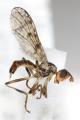
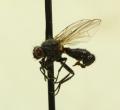
Hi. Not sure if this can be idnetified from a photo, but I think it is a Pipizella sp. One pic only taken on 8th June 2009. near Lincoln UK. Janet 
blowave attached the following image: 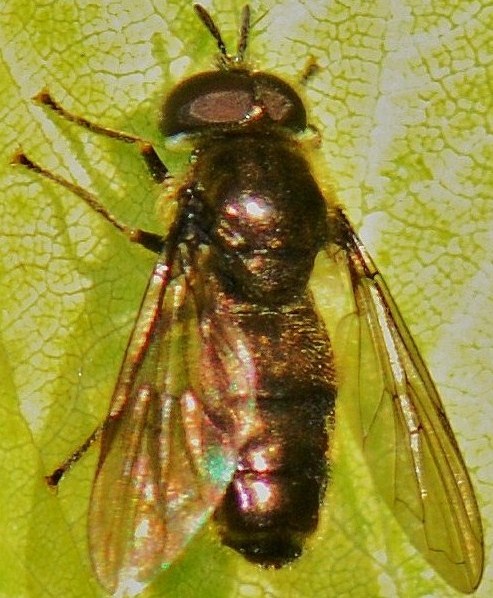 [131.34Kb] |
 |
|
| Andre |
Posted on 23-12-2009 00:00
|
 Member Location: Tilburg, the Netherlands Posts: 2111 Joined: 18.07.04 |
Correct, not possible. But how much choice do you have in your part of England? |
|
|
|
| blowave |
Posted on 23-12-2009 00:25
|
|
Member Location: LINCOLN, UK Posts: 3151 Joined: 27.06.07 |
Hi Andre, we have two other species besides P. viduata. One is Pipizella maculipennis which is very rare, only 6 records since 2000 but does spread across the country. The other is Pipizella virens which is much scarcer than P. viduata, but there are some records not too far away from me and is said to be mostly in the south east of England, I get a lot of insects which are said to be only in that area as I am not far north from it.  |
|
|
|
| Andre |
Posted on 23-12-2009 00:48
|
|
Member Location: Tilburg, the Netherlands Posts: 2111 Joined: 18.07.04 |
Virens and viduata are very much alike. Just by a picture is not enough. Start collecting, I'd say |
|
|
|
| blowave |
Posted on 23-12-2009 01:16
|
|
Member Location: LINCOLN, UK Posts: 3151 Joined: 27.06.07 |
Oh well, there's probably only two to choose from! If I could capture the flies for a start, then feed them until they have a natural death I would collect. I just can't bring myself to do it.  |
|
|
|
| Andre |
Posted on 23-12-2009 13:34
|
|
Member Location: Tilburg, the Netherlands Posts: 2111 Joined: 18.07.04 |
Than, I would say, concentrate on photographing Syrphidae that can be identified from a picture....  |
|
|
|
| blowave |
Posted on 23-12-2009 15:14
|
|
Member Location: LINCOLN, UK Posts: 3151 Joined: 27.06.07 |
Andre wrote: Than, I would say, concentrate on photographing Syrphidae that can be identified from a picture.... Lol, it's not that simple. First I take pics of anything I see, and as many angles as I can get before it disappears. There is a flaw in that if I only take pics of insects which I think can be identified, I may miss something which can be identified and may in fact be very rare. I have so far found a good number of rarities which can be identified from pics. There is also the fact that as yet I do not know many insects until they are identified, and if I were to try capturing all I see I would miss many and would end up with a lot of insects I have unnecessarily killed. |
|
|
|
| blowave |
Posted on 23-12-2009 15:23
|
|
Member Location: LINCOLN, UK Posts: 3151 Joined: 27.06.07 |
One more thing I was wondering about is what is the main difference between P. viduata and virens, if it can be seen? I have found two different lots of pics of P. virens and I think the antennae look a little shorter than on P. viduata. Is this correct? |
|
|
|
| Andre |
Posted on 23-12-2009 17:13
|
|
Member Location: Tilburg, the Netherlands Posts: 2111 Joined: 18.07.04 |
virens (compared to viduata): generally slightly longer and slimmer; long hairs of the lateral sides of tibia 3 a lot longer than tibia 3's diameter (in viduata about equal); generally longer 3rd antenna, especially in the male; arista yellowish at base (dark in viduata). But main indication is delivered by the male genitalia. |
|
|
|
| blowave |
Posted on 23-12-2009 22:43
|
|
Member Location: LINCOLN, UK Posts: 3151 Joined: 27.06.07 |
Thanks for explaining that to me Andre. Unfortunately none of these features are sufficiently visible. If I get another next year I will have a better idea what to look for. This is the first Pipizella I have had or seen, it's shame it didn't stay around longer for me to get more pics. |
|
|
|
| Jump to Forum: |