

Diptera.info :: Family forums :: Asilidae Forum
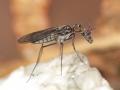
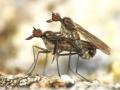
 Very small asilids from Portugal
|
|
| Rui Andrade |
Posted on 16-08-2008 14:48
|
 Member Location: Portugal Posts: 3123 Joined: 19.06.07 |
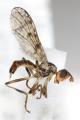
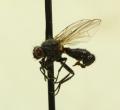
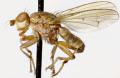
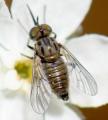
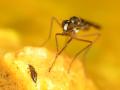
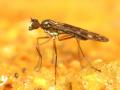
I found these tiny asilids on Santo Andr?, Alentejo, Portugal. They were very small and were always on the ground. In the last photo we can see one of these asilids eating a mite. I thought asilids only captured flying prey . .date: 13/08/2008    |
 |
|
| Eric Fisher |
Posted on 17-08-2008 02:18
|
 Member Location: California Posts: 435 Joined: 19.05.06 |
Rui: Fantastic photos - and of great interest! The asilid is a species of Stichopogon which looks very much like the Mediterranean S. scaliger Loew. However, that sp. is not known from as far west as the Iberian Peninsula, so your fly is Stichopogon sp. for now (perhaps 'Dysmachus' will be able to identify it further). Asilids nearly always feed only on flying prey. An exception are those few genera which eat spiders: these flies usually catch sitting spiders - while the asilid hovers in front of the spider's web - although some are known to catch spiders on the ground or other substrates. This is the first observation I know about of an asilid feeding on a mite (Stichopogon are known to feed spiders on the ground). I emailed R.J. Lavigne - who is the expert on asild predatory behavior - and he may provide further info on this subject. The first two photos are of females, the one eating the mite is a male. Great work! Regards, Eric |
|
|
|
| Rui Andrade |
Posted on 17-08-2008 22:08
|
|
Member Location: Portugal Posts: 3123 Joined: 19.06.07 |
Thank you Eric for your help . When I saw the asilid feeding on the mite, I was really surprised. I had already witnessed an asilid feeding on a respectably sized dragonfly (Orthetrum coerulescens), and now a very small mite, fantastic, without a doubt! . When I saw the asilid feeding on the mite, I was really surprised. I had already witnessed an asilid feeding on a respectably sized dragonfly (Orthetrum coerulescens), and now a very small mite, fantastic, without a doubt! |
|
|
|
| jorgemotalmeida |
Posted on 17-08-2008 23:24
|
 Member Location: Viseu - PORTUGAL Posts: 9296 Joined: 05.06.06 |
I have seen dozens of them near cascades. Precisely this species. |
|
|
|
| Eric Fisher |
Posted on 18-08-2008 16:22
|
|
Member Location: California Posts: 435 Joined: 19.05.06 |
Hi Rui, I heard from R.J. Lavigne, who has confirmed that this is the first record of a robber fly eating a mite (Acarina). Congratulations on your obeservation (and excellent photos)! Regards, Eric |
|
|
|
| Rui Andrade |
Posted on 19-08-2008 22:57
|
|
Member Location: Portugal Posts: 3123 Joined: 19.06.07 |
Wow, thank you very much Eric, for your wonderful news ! ! |
|
|
|
| Susan R Walter |
Posted on 20-08-2008 13:16
|
 Member Location: Touraine du Sud, central France Posts: 1802 Joined: 14.01.06 |
Very many congratulations Rui. Great work.
Susan |
|
|
|
| Rui Andrade |
Posted on 21-08-2008 00:39
|
|
Member Location: Portugal Posts: 3123 Joined: 19.06.07 |
Thank you so much Susan . . |
|
|
|
| Rui Andrade |
Posted on 11-09-2008 15:38
|
|
Member Location: Portugal Posts: 3123 Joined: 19.06.07 |
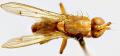
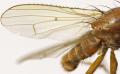
In the last 6th of September I found in Apúlia some specimens of Stichopogon that seems to belong to the same species from Santo Andre. Apúlia is nearly 400 km away from Santo Andre. What do you think, same species?   |
|
|
|
| jorgemotalmeida |
Posted on 11-09-2008 15:43
|
|
Member Location: Viseu - PORTUGAL Posts: 9296 Joined: 05.06.06 |
In my opinion, yes. Look at tibia - precisely the same spots. the same for bristles in tarsi! I would say that you are just using photos from Santo Andr?.  |
|
|
|
| Jump to Forum: |