

Diptera.info :: Identification queries :: Diptera (adults)
Who is here? 1 guest(s)
 Dryomyzidae, Psedoneuroctena senilis
|
|
| JariF |
Posted on 22-07-2008 21:42
|
 Member Location: Helsinki, Finland Posts: 2072 Joined: 20.01.06 |
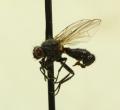
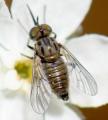
Hi, I wonder if this belongs to Sciomyzidae at all? From very old forest, Loviisa, Southern Finland today. Jari JariF attached the following image: 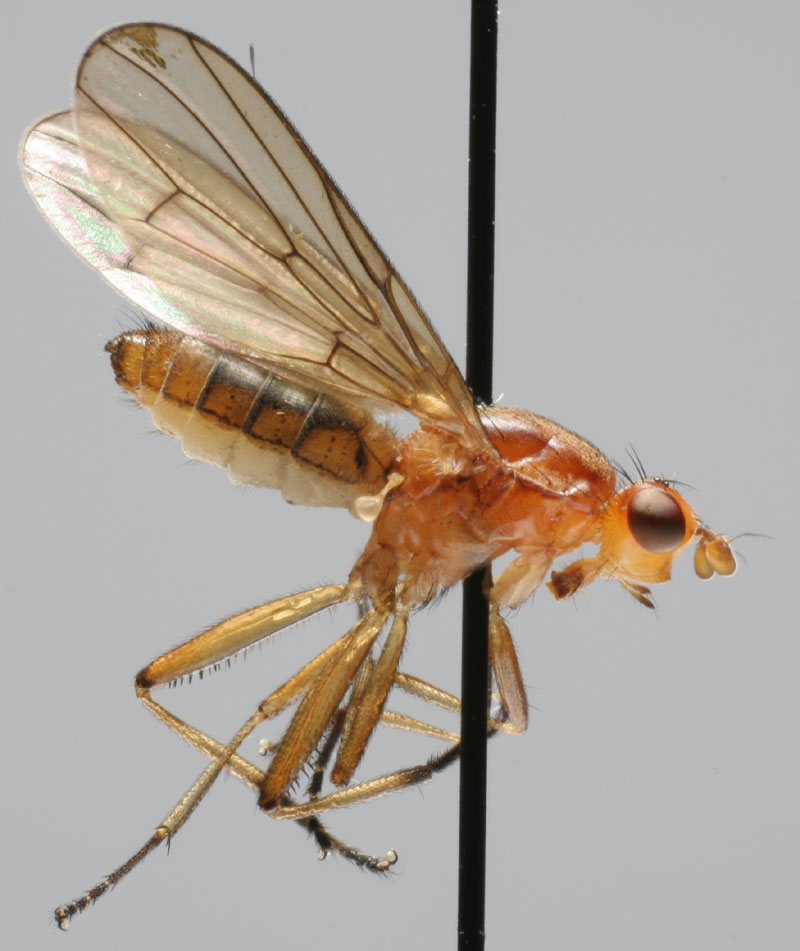 [101.29Kb] Edited by JariF on 24-07-2008 18:47 |
|
|
|
| jorgemotalmeida |
Posted on 22-07-2008 21:55
|
 Member Location: Viseu - PORTUGAL Posts: 9296 Joined: 05.06.06 |
one for nikita.  |
 |
|
| JariF |
Posted on 23-07-2008 21:12
|
|
Member Location: Helsinki, Finland Posts: 2072 Joined: 20.01.06 |
Yes, maybe he can help  Jari |
|
|
|
| Nikita Vikhrev |
Posted on 23-07-2008 21:49
|
 Member Location: Moscow, Russia Posts: 9569 Joined: 24.05.05 |
I think it is pinned Dryomyza, Nikita Nikita Vikhrev - Zool Museum of Moscow University |
|
|
|
| JariF |
Posted on 23-07-2008 22:04
|
|
Member Location: Helsinki, Finland Posts: 2072 Joined: 20.01.06 |
So that's why it made me wonder  I only have anilis and this is not it. And no book I only have anilis and this is not it. And no book  Thank You again Nikita. Thank You again Nikita.Jari |
|
|
|
| JariF |
Posted on 24-07-2008 07:50
|
|
Member Location: Helsinki, Finland Posts: 2072 Joined: 20.01.06 |
Hi, any suggestions where to find the key to Dryomyzidae ? We have only four and just two of them are Dryomyza; decrepita and flaveola but without key this will stay sp. forever Jari |
|
|
|
| Nikita Vikhrev |
Posted on 24-07-2008 08:13
|
|
Member Location: Moscow, Russia Posts: 9569 Joined: 24.05.05 |
Andrey Ozerov is working on new key. So far I know only an old one and in Russian. D. decrepita has infuscated crossveins, so it seems to be D.flaveola. Nikita Nikita Vikhrev - Zool Museum of Moscow University |
|
|
|
| JariF |
Posted on 24-07-2008 08:35
|
|
Member Location: Helsinki, Finland Posts: 2072 Joined: 20.01.06 |
Thank You so much ! Interesting family. Jari |
|
|
|
| Jan Willem |
Posted on 24-07-2008 10:15
|
 Member Location: Waalwijk, The Netherlands Posts: 2173 Joined: 24.07.04 |
I don't remember dryomyzids having such a row of spines on the hind femora. There is also an old German key for this family: Czerny, L., 1930. Dryomyzidae.? In: (E. Lindner ed.) Die Fliegen der pal?arktischen Region 5(38a): 1-8. Jan Willem van Zuijlen |
|
|
|
| Nikita Vikhrev |
Posted on 24-07-2008 12:05
|
|
Member Location: Moscow, Russia Posts: 9569 Joined: 24.05.05 |
Hi Jan. This spines bothered and still bother me too. On the other hand a havn't any other idea instead of Dryomyzidae, antennae look very anti-Sciomyzid. Jari, could you make a couple more images? Nikita Nikita Vikhrev - Zool Museum of Moscow University |
|
|
|
| Kahis |
Posted on 24-07-2008 12:37
|
 Member Location: Helsinki, Finland Posts: 1999 Joined: 02.09.04 |
It is a dryomyzid, but not Pseudoneuroctena senilis rather than Dryomyza. The R1 vein should be hairy on upper surface (like in N. anilis). This species is not common in Finland, but very widespread. Most specimens I've seen were caught in the northern half of the country. Edit. Some sources (like Fauna Europaea) list this species as a Dryomyza. Edited by Kahis on 24-07-2008 12:39 Kahis |
|
|
|
| JariF |
Posted on 24-07-2008 16:53
|
|
Member Location: Helsinki, Finland Posts: 2072 Joined: 20.01.06 |
Hi, it's getting interesting Here is an other angle. The R1 is indeed hairy on upper side. It's not visible in picture Jari JariF attached the following image: 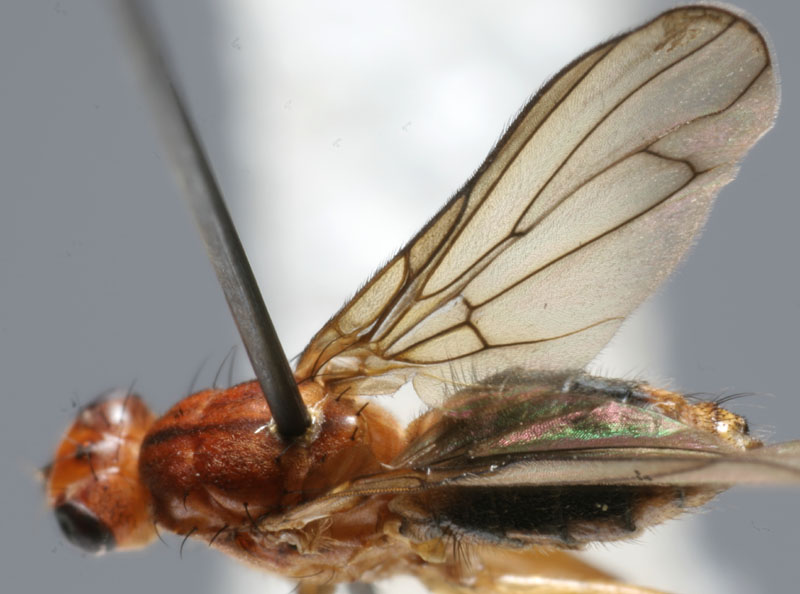 [84.72Kb] |
|
|
|
| JariF |
Posted on 24-07-2008 16:54
|
|
Member Location: Helsinki, Finland Posts: 2072 Joined: 20.01.06 |
And this is the habitat. Very fine old forest. Jari JariF attached the following image: 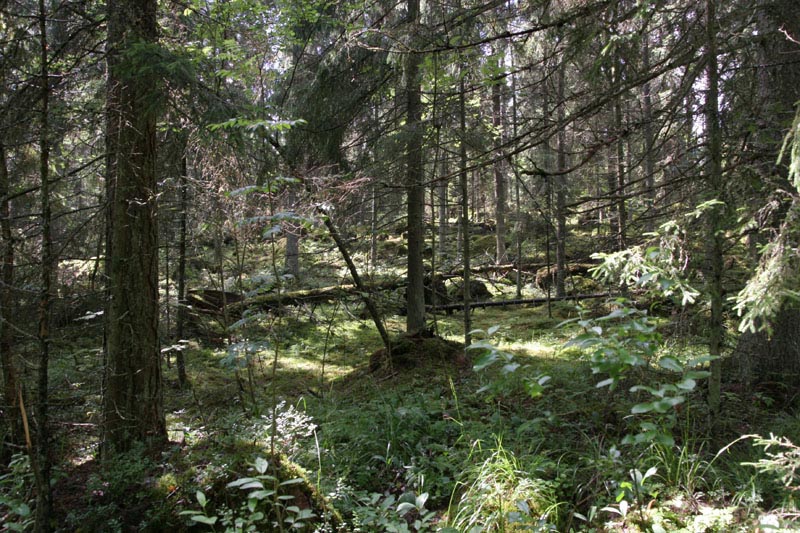 [176.88Kb] |
|
|
|
| Nikita Vikhrev |
Posted on 24-07-2008 18:40
|
|
Member Location: Moscow, Russia Posts: 9569 Joined: 24.05.05 |
Should I add that Kahis is right? P/D senilis is Fenoscandic species I never collected in my life 
Nikita Vikhrev - Zool Museum of Moscow University |
|
|
|
| JariF |
Posted on 24-07-2008 18:46
|
|
Member Location: Helsinki, Finland Posts: 2072 Joined: 20.01.06 |
Thank You both of You. If Kahis is interested, the place is only 45 minutes East from his home Nice place and needs maybe a professional to vist. Jari |
|
|
|
| Kahis |
Posted on 24-07-2008 19:28
|
|
Member Location: Helsinki, Finland Posts: 1999 Joined: 02.09.04 |
Nikita Vikhrev wrote: Should I add that Kahis is right? Please do P/D senilis is Fenoscandic species I never collected in my life I really doubt it is absent from Russia. Just look in every boreal forest stand you have there, sooner or later you'll find it 
Kahis |
|
|
|
| Kahis |
Posted on 03-05-2012 14:05
|
|
Member Location: Helsinki, Finland Posts: 1999 Joined: 02.09.04 |
My friend and colleague Kaj Winqvist warned me about something odd going on in Dryomyzidae. As usual, he was right This is definitely not Pseudoneuroctena, if the key in the Manual of Palearctic Diptera is reliable. The only dryomyzid genus with such strong setae on hind femur is Paradryomyza. Interestingly, there seem to be no genuine Pseudoneuroctena specimens in MZH at all. I wonder if there isn't some confusion here, either in the generic characters, or in the species list... In any case, I will hunt for the descriptions of the 4 known Paradryomyza species next, and hope we can find a finnish male with intact male genitalis (the specimen in MZH is a female). Cheers, Jere Kahis |
|
|
|
| JariF |
Posted on 03-05-2012 17:35
|
|
Member Location: Helsinki, Finland Posts: 2072 Joined: 20.01.06 |
Ok, interesting. Now I must just wait and maybe someday we will have a name for my fly |
|
|
|
| Ectemnius |
Posted on 16-02-2017 13:01
|
|
Member Location: The Netherlands Posts: 865 Joined: 22.11.11 |
Gentlemen, When looking for a picture of Dryope flaveola I came across this topic... Kahis is right . This is a Paradryomyza!P. spinigera; reported recently form Sweden and Norway but not from Finland as far as I can find. Norway: http://www.entomo...enlund.pdf Sweden: https://www.resea..._to_Sweden Greetigs, Ectemnius Edited by Paul Beuk on 16-02-2017 17:04 |
|
|
|
| Jump to Forum: |