

Diptera.info :: Identification queries :: Diptera (adults)
Who is here? 1 guest(s)
 Culex pipiens? = Culex pipiens group
|
|
| johnes81 |
Posted on 11-09-2017 17:51
|
 Member Location: Berlin, Germany Posts: 1980 Joined: 15.10.16 |
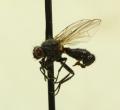
Berlin - September 11 - 5.2mm I have no experience with identification of mosquitos. I don't see bands on the legs, so I assume this to be a Culex species. I see a long proboscis, so a female? What is necessary for a species level id? I have a specimen. johnes81 attached the following image: 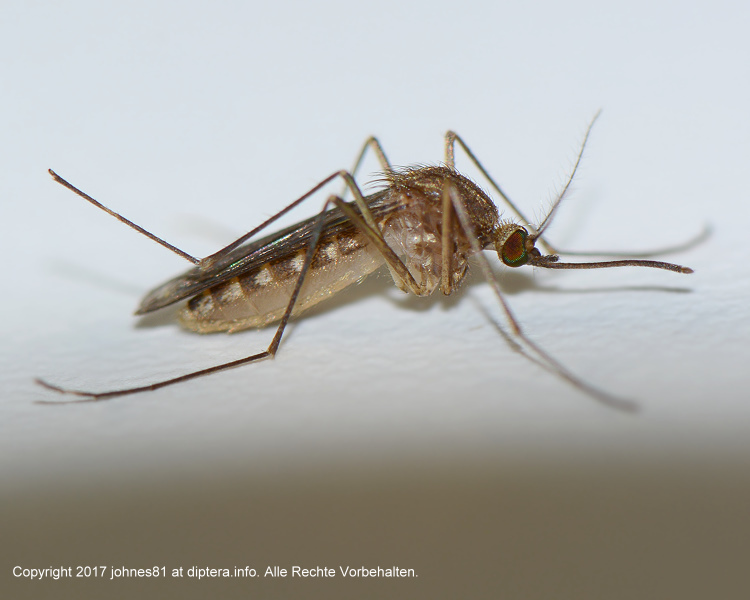 [103.81Kb] Edited by johnes81 on 13-09-2017 21:24 John and Nini. Naturalists not experts. |
|
|
|
| Tony Irwin |
Posted on 12-09-2017 10:45
|
 Member Location: Norwich, England Posts: 7353 Joined: 19.11.04 |
The lack of leg bands, the abdomen shape (blunt-ended, not tapered) and the overall appearance together point to a Culex female. There appears to be only one hind leg on your specimen, and most of its tarsal joints are missing, but the metatarsus (basal joint) looks as though it is the same length as the tibia (not shorter), so this excludes Culex modestus. There are pale marks at the base of each abdominal segment, so this excludes Culex territans, leaving us with one of the species in the Culex pipiens group, which is as far as I can take it from the photo.
Edited by Tony Irwin on 12-09-2017 10:46 Tony ---------- Tony Irwin |
|
|
|
| johnes81 |
Posted on 12-09-2017 11:27
|
|
Member Location: Berlin, Germany Posts: 1980 Joined: 15.10.16 |
Thank You very much Sir Tony. I have no experience with mosquitos other than being lunch for their appetite  I figure it could be Culex pipiens. I downloaded a bunch of pdf files but I am too busy today to read them. I want to get this under the microscope. I hope that you revisit this thread whenever I post photos from the microscope. I want to learn more about them. I just realized something: I like chironomids and I remember that they are called non-biting midges. I see photos of the male Culex with the feathery antennae and I think about Chironomids. Suddenly it occurs to me: mosquitos are biting midges. I get it now. I'm an idiot sometimes. Now it makes sense to me. I'll update this post when I have the time to do so... Thank You. John and Nini. Naturalists not experts. |
|
|
|
| johnes81 |
Posted on 13-09-2017 19:45
|
|
Member Location: Berlin, Germany Posts: 1980 Joined: 15.10.16 |
finally got around to the microcope. first photo shows a tri-lobed scutellum which is supposed to be indicative of a Culex species, yes? johnes81 attached the following image: 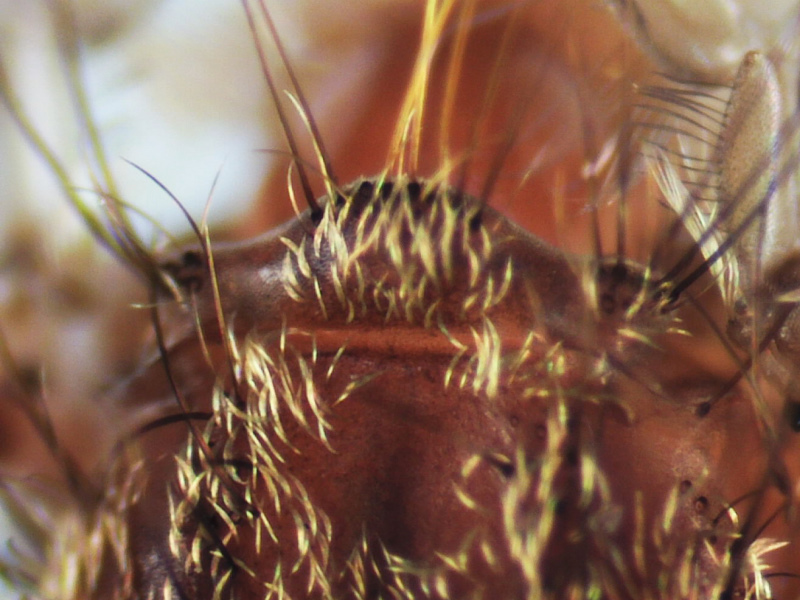 [215.07Kb] John and Nini. Naturalists not experts. |
|
|
|
| johnes81 |
Posted on 13-09-2017 19:46
|
|
Member Location: Berlin, Germany Posts: 1980 Joined: 15.10.16 |
antenna (including crop of the tip)
johnes81 attached the following image: 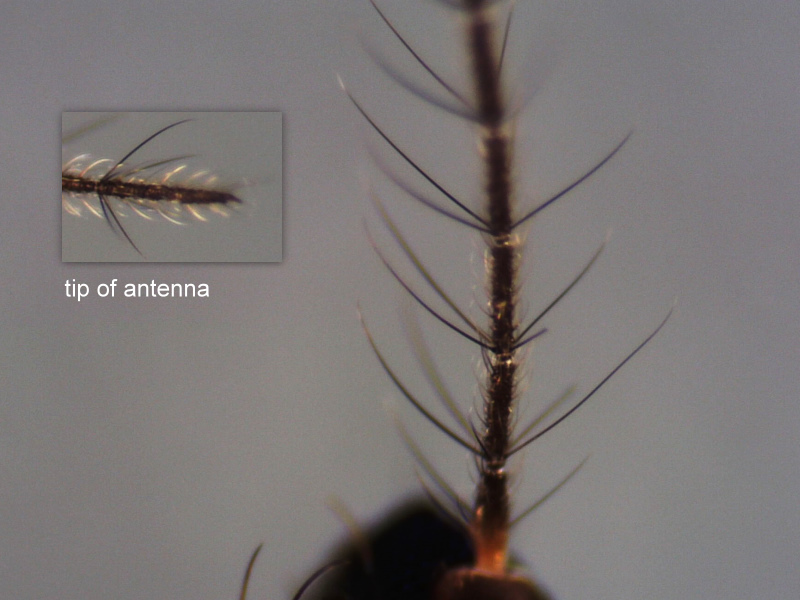 [174.64Kb] John and Nini. Naturalists not experts. |
|
|
|
| johnes81 |
Posted on 13-09-2017 19:47
|
|
Member Location: Berlin, Germany Posts: 1980 Joined: 15.10.16 |
palps are short
johnes81 attached the following image: 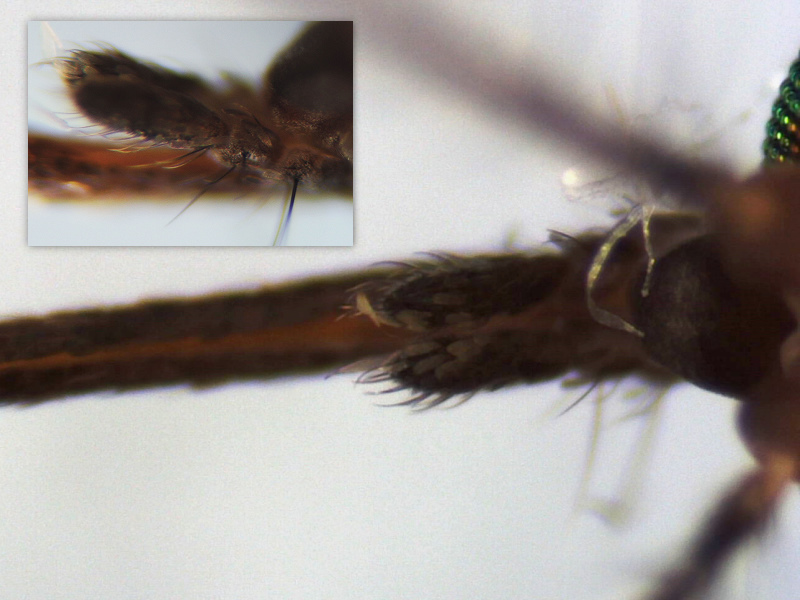 [181.3Kb] John and Nini. Naturalists not experts. |
|
|
|
| johnes81 |
Posted on 13-09-2017 19:49
|
|
Member Location: Berlin, Germany Posts: 1980 Joined: 15.10.16 |
this structure is from inside of the proboscis. is this part names the siphon? anyway, it has long tentacles attached to the main stem. I've included the tip of the structure in the photo. I imagine this part to be that which is used to suck the blood.
johnes81 attached the following image:  [196.7Kb] John and Nini. Naturalists not experts. |
|
|
|
| johnes81 |
Posted on 13-09-2017 19:49
|
|
Member Location: Berlin, Germany Posts: 1980 Joined: 15.10.16 |
tip of proboscis
johnes81 attached the following image: 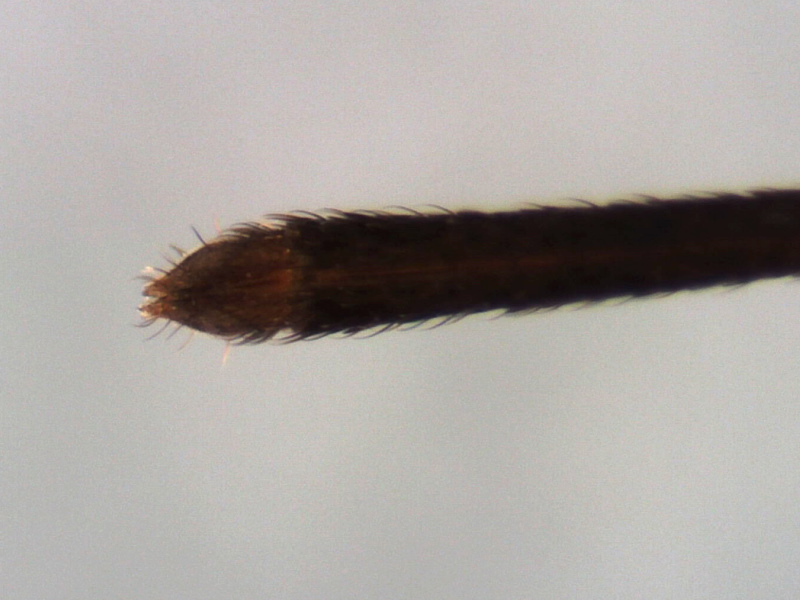 [168.4Kb] Edited by johnes81 on 13-09-2017 19:50 John and Nini. Naturalists not experts. |
|
|
|
| johnes81 |
Posted on 13-09-2017 19:50
|
|
Member Location: Berlin, Germany Posts: 1980 Joined: 15.10.16 |
wing
johnes81 attached the following image: 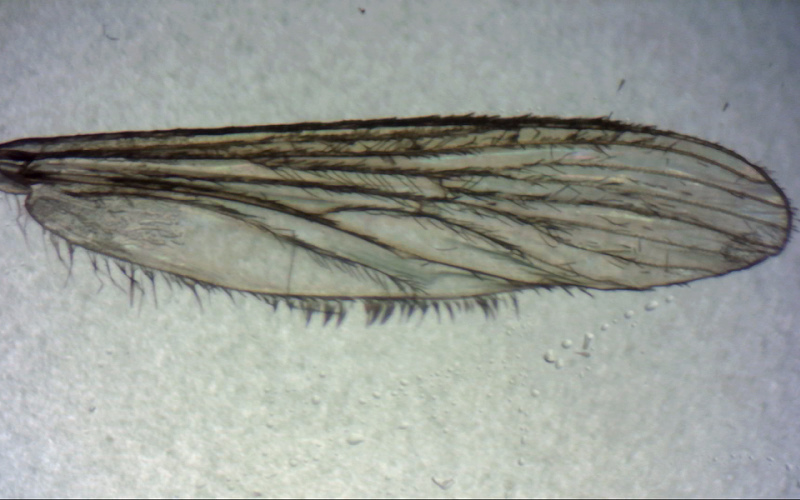 [144.96Kb] John and Nini. Naturalists not experts. |
|
|
|
| johnes81 |
Posted on 13-09-2017 19:51
|
|
Member Location: Berlin, Germany Posts: 1980 Joined: 15.10.16 |
abdomen lateral view
johnes81 attached the following image: 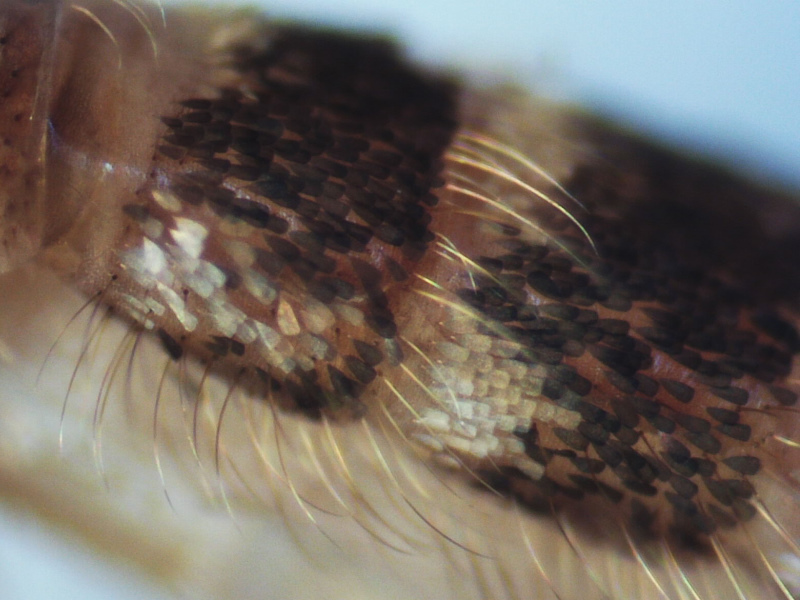 [194.66Kb] John and Nini. Naturalists not experts. |
|
|
|
| johnes81 |
Posted on 13-09-2017 19:51
|
|
Member Location: Berlin, Germany Posts: 1980 Joined: 15.10.16 |
scales
johnes81 attached the following image: 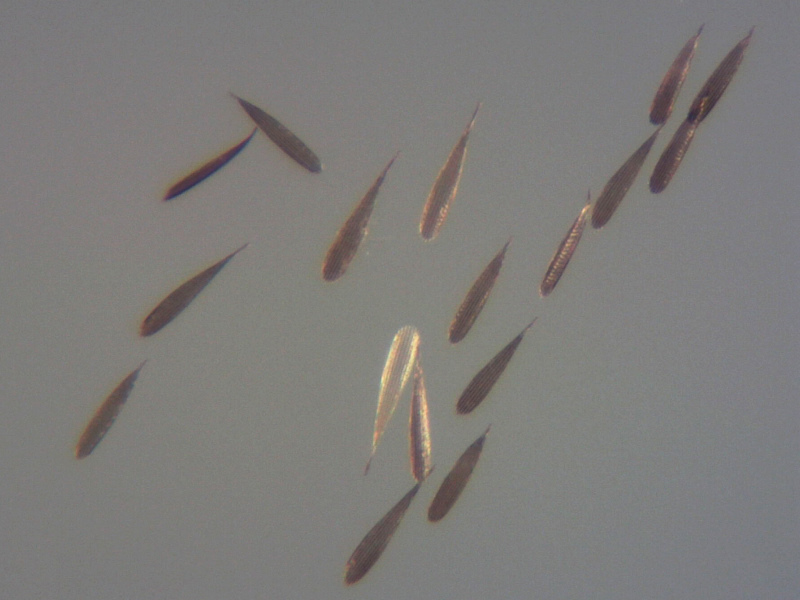 [158.2Kb] John and Nini. Naturalists not experts. |
|
|
|
| johnes81 |
Posted on 13-09-2017 19:52
|
|
Member Location: Berlin, Germany Posts: 1980 Joined: 15.10.16 |
ovipositor
johnes81 attached the following image: 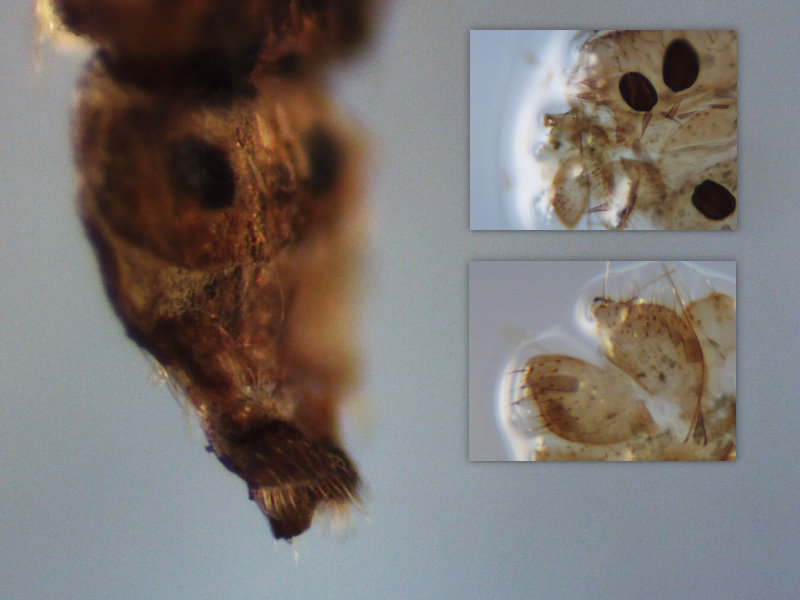 [184.96Kb] John and Nini. Naturalists not experts. |
|
|
|
| johnes81 |
Posted on 13-09-2017 20:16
|
|
Member Location: Berlin, Germany Posts: 1980 Joined: 15.10.16 |
hopefully we can name this mosquito. following is a list of Culex for Germany but I have no idea about Berlin. Some of these may not be recorded in Berlin: Culex modestus Culex pipiens Culex torrentium Culex hortensis Culex martinii Culex territans John and Nini. Naturalists not experts. |
|
|
|
| Tony Irwin |
Posted on 13-09-2017 20:22
|
|
Member Location: Norwich, England Posts: 7353 Joined: 19.11.04 |
The tri-lobed scutellum is indicative of the subfamily Culicinae, which includes Culex, Culiseta, Aedes, Ochlerotatus, Coquillettidia and Orthopodomyia among others. Only the Anophelinae have a simply rounded scutellum. The palps are indeed short, which is another good way to distinguish the females of Culicinae from Anophelinae. With the exception of Aedes (sensu stricto), all male mosquitoes have long palps. Apart from the genitalia, the sexes can be separated by the antennae, which are more densely and longer-haired in the male. The dense covering of scales on the abdomen is typical of Culicinae, but not Anophelinae. But beware of old specimens - the scales are easily lost. Tony ---------- Tony Irwin |
|
|
|
| Tony Irwin |
Posted on 13-09-2017 20:41
|
|
Member Location: Norwich, England Posts: 7353 Joined: 19.11.04 |
As I pointed out above, your specimen has pale basal bands on the abdominal tergites. Cx.territans and Cx.hortensis have pale apical bands. Cx.martinii has no bands. Cx.modestus has a shorter hind basitarsus. The differences between female Cx.pipiens and Cx.torrentium are very slight, and rely on having freshly-emerged specimens in good condition. So we can name this mosquito as Culex "pipiens group".
Edited by Tony Irwin on 13-09-2017 20:42 Tony ---------- Tony Irwin |
|
|
|
| johnes81 |
Posted on 13-09-2017 21:24
|
|
Member Location: Berlin, Germany Posts: 1980 Joined: 15.10.16 |
Thank You Sir Tony. I appreciate the extensive amount of data that you have provided here. I'm sure that many other members also appreciate this info. I had to search for Culex pipiens complex because you suggested pipiens group instead of a species. I see the problem now. We have a case of molecular biology for a positive id. very interesting. I Thank You very much for everything. Case closed. John and Nini. Naturalists not experts. |
|
|
|
| Jump to Forum: |