

Diptera.info :: Identification queries :: Diptera (adults)
Who is here? 1 guest(s)
 Muscid or Anthomyiid?
|
|
| bradbarnd |
Posted on 12-01-2012 18:26
|
|
Member Location: USA Posts: 164 Joined: 28.07.11 |
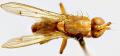
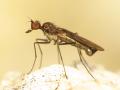
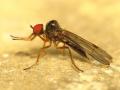
Further ID possible? Posting for Tom Murray Massachusetts, USA April 22, 2011 7.5mm BL  
Edited by bradbarnd on 15-01-2012 23:50 |
 |
|
| javanerkelens |
Posted on 13-01-2012 14:12
|
 Member Location: Netherlands Posts: 2962 Joined: 18.10.07 |
A very confusing fly! Mayby i overlook something and will say afterwards…of course that is the one, but for now it is only a mystery. The notopleuron depression is haired, wings are infuscated, arista bare, on hind tibia only 2ad+2pd, eyes seems bare, scutellum hairy but with some bare areas. Does the analvein reach indeed the costa…? And are there 3 or 4 dorsal centrals…? Is it indeed Anthomyiidae or Muscidae…? I know some Anthomyiidae with the wings infuscated, but then they should have arista long haired or notopleuron depression bare. There are some Muscidae with more pd on t3, but then the other characters just don’t fit. For both, nothing seems to fit. So if possible….can you make a crop of the head, thorax and the wing (analvein area). Maybe you also have other photo’s… (maybe Stephen, Ackland or Stephane, Nikita can give some solution..) Edited by javanerkelens on 13-01-2012 14:13 |
|
|
|
| bradbarnd |
Posted on 14-01-2012 19:56
|
|
Member Location: USA Posts: 164 Joined: 28.07.11 |
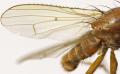
Thanks. We don't have any other photos, but I'll add crops of these that may help.
bradbarnd attached the following image:  [44.43Kb] |
|
|
|
| bradbarnd |
Posted on 14-01-2012 19:57
|
|
Member Location: USA Posts: 164 Joined: 28.07.11 |
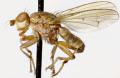
.
bradbarnd attached the following image:  [71.29Kb] |
|
|
|
| javanerkelens |
Posted on 14-01-2012 22:56
|
|
Member Location: Netherlands Posts: 2962 Joined: 18.10.07 |
If I see it right, the analvein does not reach the costa. Only the shadow of a folt in the wing..... Then it has to be Muscidae I will look into it, but maybe Stephane will give it a look also! |
|
|
|
| Stephen R |
Posted on 14-01-2012 23:31
|
 Member Location: Clitheroe Lancashire UK Posts: 2396 Joined: 12.06.09 |
I was completely lost with this one. The calypter looks very small... |
|
|
|
| oxycera |
Posted on 15-01-2012 09:04
|
|
Member Location: Barnsley, South Yorkshire Posts: 251 Joined: 31.12.09 |
Those hind tibial bristles remind me of Fannia. |
|
|
|
| Stephane Lebrun |
Posted on 15-01-2012 12:32
|
 Member Location: Le Havre, France Posts: 8248 Joined: 03.03.07 |
There are more criteria speaking for Anthomyiidae than Muscidae : bare arista, small calypters, 2 pd on t3, anal vein seems very long (could reach wing margin as a fold), 3 post dc, prst acr. etc. The wing venation is wrong for Fanniidae. Stephane. |
|
|
|
| javanerkelens |
Posted on 15-01-2012 22:59
|
|
Member Location: Netherlands Posts: 2962 Joined: 18.10.07 |
Assuming that it is indeed Anthomyiidae, I think it belongs to Pegomyini. Looking into the Nearctic Pegomya (Griffiths)(including; Parapegomyia, Emmesomyia) I could not find species with the crossveins infuscated. Looking at some old material I only could find Pegomya chrysida(Huckett) with the crossveins clouded and second antennal segment yellow (found in California), but no further description was given about this species. So i think i have to pass on this one…. Maybe collecting some species ? |
|
|
|
| bradbarnd |
Posted on 15-01-2012 23:47
|
|
Member Location: USA Posts: 164 Joined: 28.07.11 |
Thanks for all the comments. It is definitely tough to place. Tom has some additional views of this fly, maybe they will help, maybe not... They are at least clearer and sharper than the crops I already added.  
Edited by bradbarnd on 15-01-2012 23:48 |
|
|
|
| Stephen R |
Posted on 16-01-2012 11:22
|
|
Member Location: Clitheroe Lancashire UK Posts: 2396 Joined: 12.06.09 |
Now we can see 3 pds on the right hind tibia! That changes things a bit  |
|
|
|
| Stephen R |
Posted on 16-01-2012 17:08
|
|
Member Location: Clitheroe Lancashire UK Posts: 2396 Joined: 12.06.09 |
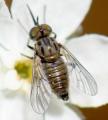
Because of the pre-alar and long legs I was thinking around Eutrichota and came up with this old posting http://www.dipter...d_id=12332 from Tony T in Canada. I don't know what it turned out to be, but several features look similar to this one (e.g. antennae), and there is a suspicion of darkening of the crossveins. Edited by Stephen R on 16-01-2012 17:34 |
|
|
|
| javanerkelens |
Posted on 16-01-2012 18:29
|
|
Member Location: Netherlands Posts: 2962 Joined: 18.10.07 |
Well done Stephen, luckely we have some people with a good memory  I miss the av on the hind and midtibia on this fly, but probable broken...  |
|
|
|
| bradbarnd |
Posted on 16-01-2012 20:20
|
|
Member Location: USA Posts: 164 Joined: 28.07.11 |
Thanks Stephen, that does look quite similar. |
|
|
|
| Stephen R |
Posted on 17-01-2012 11:55
|
|
Member Location: Clitheroe Lancashire UK Posts: 2396 Joined: 12.06.09 |
javanerkelens wrote: luckely we have some people with a good memory If only... . But it's a good instance of the benefits of having a searchable archive. Thanks Paul! |
|
|
|
| John Carr |
Posted on 05-01-2013 03:49
|
 Super Administrator Location: Colorado, USA Posts: 10660 Joined: 22.10.10 |
Probably Eutrichota cylindrica (Stein). The fine hairs on the sides of the thorax and the long discal hairs on scutellum put it in Griffiths's E. cylindrica superspecies (= Eremomyiodes). Of the two species that are common in Massachusetts, E. cylindrica has reddish tibiae and is the more common. |
|
|
|
| Michael Ackland |
Posted on 05-01-2013 10:31
|
|
Member Location: Dorset UK Posts: 680 Joined: 23.02.08 |
It is a species of Eutrichota belonging to the cylindrica Stein species group which has 6 species in the Nearctic Region. E. cylindrica is the most abundant species, and has been associated with ground hog (Marmota) burrows, in which the larvae probably live. A specimen is needed to ID to species I think John Carr beat me to it! I was typing this as his posting appeared! |
|
|
|
| Jump to Forum: |