

Diptera.info :: Identification queries :: Diptera (adults)
 Phaonia tuguriorum/scutellata/valida
|
|
| Robert Heemskerk |
Posted on 22-09-2008 21:21
|
 Member Location: Amsterdam, Netherlands Posts: 2082 Joined: 17.10.05 |
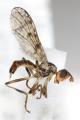
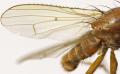
hi flyforum, Crossveins are infuscated. I think the foretibia got posterior setae (one long setae on the foretibia and some smaller setae next to it) The palps seems dark(black) to me.. End of the scutem got orange tip. Don't know what prescutellar ac meant? (what is ac?) Is id possible? Robert - lost in terminology - Robert Heemskerk attached the following image:  [144.92Kb] Edited by Robert Heemskerk on 26-09-2008 23:12 Greeting, Robert Heemskerk ---- WWW: http://robertheem...ndedag.htm --- |
 |
|
| Robert Heemskerk |
Posted on 22-09-2008 21:22
|
|
Member Location: Amsterdam, Netherlands Posts: 2082 Joined: 17.10.05 |
face and mouthparts
Robert Heemskerk attached the following image:  [134.98Kb] Edited by Robert Heemskerk on 22-09-2008 21:22 Greeting, Robert Heemskerk ---- WWW: http://robertheem...ndedag.htm --- |
|
|
|
| Robert Heemskerk |
Posted on 22-09-2008 21:23
|
|
Member Location: Amsterdam, Netherlands Posts: 2082 Joined: 17.10.05 |
face and mouthparts II
Robert Heemskerk attached the following image:  [132.31Kb] Edited by Robert Heemskerk on 22-09-2008 21:23 Greeting, Robert Heemskerk ---- WWW: http://robertheem...ndedag.htm --- |
|
|
|
| Robert Heemskerk |
Posted on 22-09-2008 21:24
|
|
Member Location: Amsterdam, Netherlands Posts: 2082 Joined: 17.10.05 |
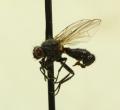
foretibia and setae
Robert Heemskerk attached the following image:  [69.81Kb] Edited by Robert Heemskerk on 22-09-2008 21:24 Greeting, Robert Heemskerk ---- WWW: http://robertheem...ndedag.htm --- |
|
|
|
| Robert Heemskerk |
Posted on 22-09-2008 21:24
|
|
Member Location: Amsterdam, Netherlands Posts: 2082 Joined: 17.10.05 |
foretibia and setae II
Robert Heemskerk attached the following image:  [116.31Kb] Edited by Robert Heemskerk on 22-09-2008 21:25 Greeting, Robert Heemskerk ---- WWW: http://robertheem...ndedag.htm --- |
|
|
|
| Robert Heemskerk |
Posted on 26-09-2008 23:43
|
|
Member Location: Amsterdam, Netherlands Posts: 2082 Joined: 17.10.05 |
hi flyforum, Looking back to earlier comments about Phaonia sp., I can say about the following speciesdifferences: Posterior setae P. valida en errans > No posterior setae. P. tuguriorum/scutellata > posterior setae. prescutellar ac P. tuguriorum and P. scutellata got 1 prescutellar ac P. valida en P. errans got 2 prescutellar ac. In my pictures (above), I can see posterior setae (right?), so it should be P. tuguriorum (P. scutellata is not a Dutch specie) looking at the prescutellar ac-feature, P. tuguriorum should have 1 prescutellar ac. In the following detail-picuture from my fly, I am not sure if this is 1 prescutellar ac? (I coloured two pair of ac-setae in front of the scutum) Is it? how do you count these prescutellar ac? Are there other good features which can be used for determination? (please forget the last blue line..) 
Robert Heemskerk attached the following image:  [148.28Kb] Edited by Robert Heemskerk on 26-09-2008 23:47 Greeting, Robert Heemskerk ---- WWW: http://robertheem...ndedag.htm --- |
|
|
|
| javanerkelens |
Posted on 27-09-2008 17:31
|
 Member Location: Netherlands Posts: 2962 Joined: 18.10.07 |
Hello Robert, I don't think it is P.valida/tuguriorum Your fly has interfrontals and P.valida/tuguriorum has not. (Maybe Thricops sp. postpronotal calli seems yellow) But I'm no expert !!  Greatings Joke Edited by javanerkelens on 27-09-2008 19:00 |
|
|
|
| Robert Heemskerk |
Posted on 27-09-2008 20:51
|
|
Member Location: Amsterdam, Netherlands Posts: 2082 Joined: 17.10.05 |
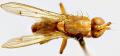
 That is surpirsing me.. That is surpirsing me..It are interfrontals indeed?! I'll show you another picture where you can see it in a better dorsal way. Look at the wingveins, the crossveins which are infuscated and the orange tip on the scutellum. That's was why I was thinking about Phaonia.. DM-Cu got a gentle swing, this including it's size makes it more and more P. valida for me. Sumarized I would say, many characters drives it to P. valida except: - fore tibia with posterior setae? (if I'm critisizing correctly..) - interfrontal setea ? Robert Heemskerk attached the following image:  [155.9Kb] Edited by Robert Heemskerk on 27-09-2008 20:52 Greeting, Robert Heemskerk ---- WWW: http://robertheem...ndedag.htm --- |
|
|
|
| Robert Heemskerk |
Posted on 28-09-2008 00:12
|
|
Member Location: Amsterdam, Netherlands Posts: 2082 Joined: 17.10.05 |
Now I see that I misunderstood the notion of posterior setae.. These setae are not the setae shown in my pictures of the tibia above (foretibia and setae), the posterior setae are located more in the middle of the fortibia. The bristles you see on the picture are the apical bristles, .. if I'am right.. The - interfrontal setea is still something that doesn't fit with Phaonia sp. . .. Greeting, Robert Heemskerk ---- WWW: http://robertheem...ndedag.htm --- |
|
|
|
| Stephane Lebrun |
Posted on 28-09-2008 09:51
|
 Member Location: Le Havre, France Posts: 8248 Joined: 03.03.07 |
Indeed, there is no p setae on t1 and 2 prescutellar ac -> when can rule out P. tuguriorum/scutellata. Whe can also rule out P. valida (no interfrontal setae). I don't know whether P. errans female has interfrontals, but for the moment I have nothing better to propose. Stephane. |
|
|
|
| nielsyese |
Posted on 08-05-2013 20:07
|
 Member Location: Yerseke, NL Posts: 2387 Joined: 13.02.09 |
I think this is a female Phaonia valida after all because of the reddish upper part of antenna, wing venation (m1) and totally red front femora. The light appearance fits also more for P. valida. Maybe interfrontals can sometimes occur in this species. What do you think Stephane?
Best wishes, Niels-Jan Dek |
|
|
|
| Stephane Lebrun |
Posted on 08-05-2013 22:01
|
|
Member Location: Le Havre, France Posts: 8248 Joined: 03.03.07 |
I can't see the reddish hairs on lower part of occiput. I'm still in doubt. I also considered P. mediterranea but some things don't fit.
Stephane. |
|
|
|
| Jump to Forum: |