

Diptera.info :: Identification queries :: Diptera (adults)
 Empididae: Rhamphomyia sp. ---> Rh. cf. trilineata
|
|
| Walther Gritsch |
Posted on 15-02-2010 21:51
|
 Member Location: Copenhagen Posts: 303 Joined: 31.01.09 |
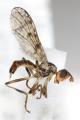
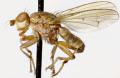
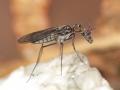
Hi I arrive at Rhamphomyia sulcatina when running this one through Collin (British flies, vol. VI). The genitalia seem to fit alright – especially in the caudal view. Lateral view is perhaps a bit more iffy... Otherwise it appears to be a match with the abdomen shining black. Bodylength ~ 7 mm. Are there any alternatives to consider or is Rh. sulcatina the only option? The fly was caught on 27. iv 2009 at a small lake on the outskirts of a forest with lots of Betula and Salix some 10 km from Copenhagen. Regards, Walther Gritsch attached the following image:  [178.52Kb] Edited by Walther Gritsch on 16-02-2010 20:12 Walther |
|
|
|
| Walther Gritsch |
Posted on 15-02-2010 21:52
|
|
Member Location: Copenhagen Posts: 303 Joined: 31.01.09 |
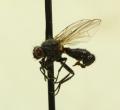
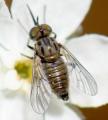
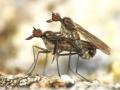
A view of the whole empid.
Walther Gritsch attached the following image:  [167.36Kb] Walther |
|
|
|
| Paul Beuk |
Posted on 16-02-2010 09:30
|
 Super Administrator Location: Netherlands Posts: 19403 Joined: 11.05.04 |
I don't trust Collin's illustrations of the genitalia. The way the genitalia look in lateral and posterior aspects is too dependent on how the specimen dried. The only one that can be separated reliably on the basis of these illustrations is R. sulcata. I must admit I have never seen sulcatina but from what I understood the acrostichals provide a reliable character for identification without dissection (two rows in sulcatina, 3-4 in others), the aedeagus is also characteristic if you pry it from between the genital lamellae. I have a few additional characters to separate cinerascens from sulcatella, but these notes are at the office. Moreover, I don't think cinerascens and subcinerascens are different species.
Paul - - - - Paul Beuk on https://diptera.info |
 |
|
| Paul Beuk |
Posted on 16-02-2010 09:32
|
|
Super Administrator Location: Netherlands Posts: 19403 Joined: 11.05.04 |
By the way, R. sulcatina has been shown to be a junior synonym of R. trilineata Zetterstedt, 1859, so you should use that name. 
Paul - - - - Paul Beuk on https://diptera.info |
|
|
|
| Walther Gritsch |
Posted on 16-02-2010 20:14
|
|
Member Location: Copenhagen Posts: 303 Joined: 31.01.09 |
Thank you for the effort so far, Paul. The acrosticals are definitely biserial which would indicate Rh. trilineata. I also have the same misgivings as you do about the shape of the lamellae as a key character. The specific way the genital lamellae dry is bound to have an effect on how they look. I haven't had a look on the aedeagus yet, but will do so tomorrow. Time to perform a bit of surgery! I'll post a picture if the operation is a success Best regards, Walther |
|
|
|
| Walther Gritsch |
Posted on 17-02-2010 19:54
|
|
Member Location: Copenhagen Posts: 303 Joined: 31.01.09 |
This is then the result of my prying... As you can see I haven't cleared the aedeagus and the pictures aren't top quality, but it is the best I can do at the moment. Depth of field is very shallow so I have included photos with a slightly different focus. My own opinion is that it is Rh. trilineata (Collin's sulcatina) mainly based on the keel-like structure on the dorsal (or is it ventral?) part of the phallus. The acrosticals by the way though they are biserial are not placed in two straight lines, but in alternating pairs which might give the impression of them being quadriserial. Is this enough to pass final judgement...? Regards, Walther Gritsch attached the following image:  [171.36Kb] Walther |
|
|
|
| rvanderweele |
Posted on 23-05-2013 19:54
|
|
Member Location: Leiden, the Netherlands Posts: 1988 Joined: 01.11.06 |
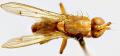
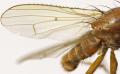
Always good to go back to an old thread. I think (!) I have a female Rhamphomyia sulcatina from WInterswijk. I will show it once to you, Paul. It indeed looks like to R. sulcata, but then with 2 ac rows. I just wonder why on Fauna Europaea R. sulcatina is still considered an accepted species, while above it is said R. sulcatina is a jun. syn. of R. trilineata. What do I have to write down on the label (with a small "?"
ruud van der weele rvanderweele@gmail.com |
|
|
|
| Jump to Forum: |