


Diptera.info :: Identification queries :: Diptera (adults)
Who is here? 1 guest(s)
 Is it Adapsilia coarctata?
|
|
| Nikita Vikhrev |
Posted on 14-09-2026 08:34
|
 Member Location: Moscow, Russia Posts: 9606 Joined: 24.05.05 |
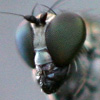
Adapsilia coarctata Waga, 1842: Far East, Primorsky region,b Andreevka ,42.65N 131.14E 7-11.09.2026, N. Vikhrev, on light. Is there any disaggrement with my identification? Nikita Vikhrev attached the following image:  [80.2Kb] Nikita Vikhrev - Zool Museum of Moscow University |
|
|
|
| Nosferatumyia |
Posted on 14-09-2026 11:05
|
 Member Location: Posts: 3603 Joined: 28.12.07 |
Yes, it is common there, but conspecific to the European one (which is very rare)
Edited by Nosferatumyia on 14-09-2026 11:05 Val |
|
|
|
| Nikita Vikhrev |
Posted on 14-09-2026 11:19
|
|
Member Location: Moscow, Russia Posts: 9606 Joined: 24.05.05 |
Thank you Valeriy. I know the history of A. coarctata, but I had to get expert's confirmation before submitting it in Gallery. I wonder is it Asian species introduced in Europe or it lives there during do-human epoch? Nikita Vikhrev - Zool Museum of Moscow University |
|
|
|
| Andrzej |
Posted on 14-09-2026 15:18
|
|
Member Location: Poland Posts: 2461 Joined: 05.01.06 |
Here is a link to a female found in Poland: https://wigpn.gov...e17d66c.pdf (p. no 8)
Edited by Andrzej on 14-09-2026 15:18 Dr. A. J. Woznica, Institute of Biology, Wroclaw University of Environmental & Life Sciences. Poland |
|
|
|
| Nikita Vikhrev |
Posted on 14-09-2026 20:34
|
|
Member Location: Moscow, Russia Posts: 9606 Joined: 24.05.05 |
Still no answer on my wonder. To find answer we need COI sequences of European specimen and that from Far East. If there is 0% of substitutions than it came to Europe with Genghis Khan or later, if there are about 0.5-1% of substitutions, than it came in last thermoera about 120 000 years ago.
Edited by Nikita Vikhrev on 14-09-2026 20:43 Nikita Vikhrev - Zool Museum of Moscow University |
|
|
|
| Nosferatumyia |
Posted on 14-09-2026 20:44
|
|
Member Location: Posts: 3603 Joined: 28.12.07 |
It is a forest species depending on its (unknown) melolonthine host. It is reported from Europe from time to time but looks to be endangered here. BTW, there are no barcods of the Old World pyrgotids (except perhas in South Korea -- but Ho-Yeon uses mostly 16S. There were his and my keys, the FER names are still valid, so anyone who wants to barcode Chinese or Japanese stuff can ID it easily. My Oriental revisions remained unfinished.
Val |
|
|
|
| Jump to Forum: |